Celina Schouten is no stranger to death. She grew up in California’s San Joaquin Valley, in a large, close-knit family descended from Portuguese immigrants. By middle age, she had lost her grandfather, her parents, and several uncles — all before the age of 75. She had watched many of them grow sicker as their hearts gradually gave out.
Her cousin Karen’s death was different. The two women, born just weeks apart, were bonded like twins. In 2012, on the cusp of their 60th birthdays, Karen took a trip to San Francisco to visit friends. She was spirited and active, Schouten remembers, “just full of life.” After a Giants game and a night on the town, the friends retired to their hotel. By morning, Karen was dead.
Because she died suddenly outside a hospital, the San Francisco County medical examiner’s office investigated. There were no apparent injuries or illness. No drugs or poisons at the scene. No evidence of foul play. It was clear she had died naturally, from an invisible, interior foe. In most jurisdictions, an autopsy would have been foregone and the tragedy put down to sudden cardiac death — an unexpected and fatal stoppage of the heart, usually due to an electrical malfunction. But San Francisco is not like most jurisdictions.
For the past 15 years, cardiac electrophysiologist Zian Tseng, MD ’98, MAS ’08, the Murray Davis Professor at UC San Francisco, has been working with the county medical examiner’s office to uncover the root causes of sudden cardiac death. This includes performing autopsies in many presumed cases that occur outside a hospital, a circumstance that accounts for about 90% of sudden deaths. Around the time Karen died, “sudden cardiac death” was being listed as the cause of death on hundreds of death certificates per year in San Francisco County. It was and is still considered a major global killer, credited with claiming the lives of an estimated 4 million to 7 million people annually, most of whom had no previous signs of heart trouble.
But as Tseng’s research would reveal, many of those deaths weren’t what they seemed.
A “Crazy” Idea
Tseng is what locals call a Bay Area lifer. “I’ve never left a 40-mile radius of San Francisco,” he jokes. Born in the city, he was raised in Fremont, where his father, an earthquake engineer, and mother made their home after emigrating from Taiwan. When he was 6, he checked out a library book about the heart and was hooked. “I’m one of those clichés,” he says. “I knew in first grade that I wanted to be a cardiologist.”
After medical school, residency, and a fellowship at UCSF, he joined the faculty in 2004. “I was really excited about clinical practice, just the thrill of curing people who had life-threatening rhythm disorders,” he says. One of his specialties was implanting cardioverter-defibrillators, which detect dangerous irregular heartbeats and shock the heart back into a normal rhythm. Since the 1980s, cardiologists had been treating more and more patients known to be at risk of sudden cardiac death with these devices. Yet the death rate remained frustratingly high. “We were implanting a lot of defibrillators,” Tseng says, “but a lot of people were still dying suddenly.”
In many cases, their hearts seemed to be working just fine, so there was no indication that they needed a defibrillator. “Clearly we were missing something,” Tseng says. Suspecting genetic factors, he set out to find them. In a small study of heart attack survivors, he identified a genetic marker that lowered the risk of cardiac arrest — a significant finding, because if a cardiac arrest isn’t reversed, it results in sudden cardiac death. He was thrilled by the discovery, which he saw as the beginning of a fruitful research career. But just as the paper describing it was about to be published, he learned that a team at the University of Washington had shown the opposite effect: that the marker raised risk.
At first, he assumed his own result must be wrong. “I was a very junior faculty member, and these were very smart, senior scientists,” he says. Their study was also much larger and hence, inherently more reliable. Whereas he had enrolled hundreds of subjects, the Washington team had cleverly recruited
thousands by collaborating with local paramedics. “I have to figure out how to do a study like that,” Tseng concluded. He began calling up emergency responders in San Francisco, asking them to send him blood from people who’d died of cardiac arrest. Which got him wondering: How did the paramedics know the patients’ hearts were to blame?
“They said, ‘It’s paramedic primary impression,’” Tseng recalls. “That means the paramedic comes on the scene, and their impression is it’s cardiac arrest. So I went to the medical examiner. I said, ‘So your autopsies confirm these cases?’ They said, ‘We don’t do autopsies unless it’s a suspicious death.’”
The situation, he learned, was the same around the world: In the U.S., only 10% of sudden cardiac deaths outside hospitals are verified by autopsy; Europe has the highest rate, at 25%. “Wow!” Tseng thought. “How are we going to save victims of cardiac arrest if we don’t know which ones are really cardiac? How are we going to study risk factors? How are we going to study mechanisms?”
Then he had a “crazy” idea: What if the autopsy rate for sudden deaths in San Francisco County was 100%?
How are we going to save victims of cardiac arrest if we don’t know which ones are really cardiac? How are we going to study risk factors? How are we going to study mechanisms?”
Zian Tseng, MD, MAS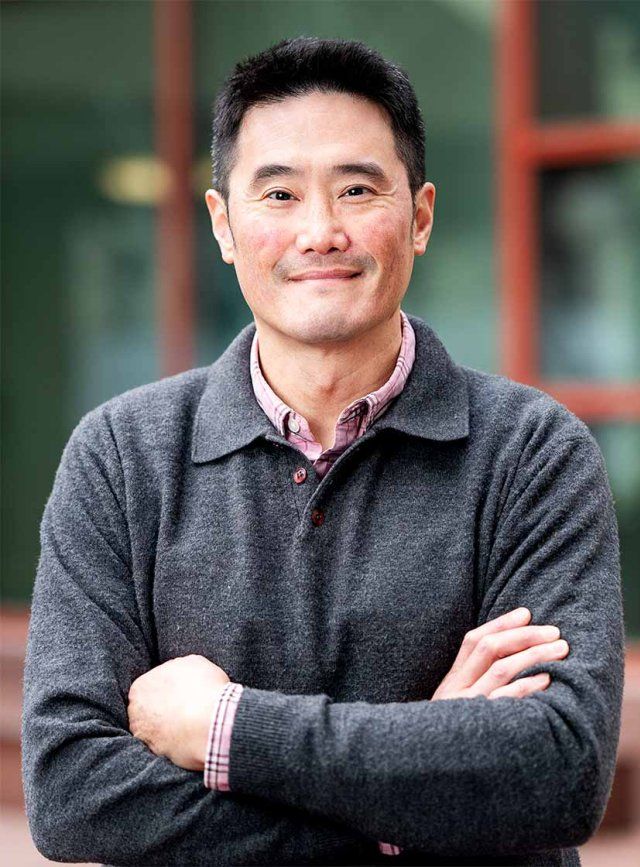
Mysterious Fathoms
Sudden cardiac death is often described as an iceberg. The tip, scantly visible above the sea’s surface, represents the cases doctors can predict and thus have a chance of preventing — people who survived a cardiac arrest, for example, or who have diagnosed heart-rhythm disorders or poorly pumping hearts. The rest of the iceberg, its hulking, submerged underbelly, represents the silent sick — people who will die, without warning, from a concealed cause.
Experts have long believed that hidden coronary artery disease, a narrowing or blockage of the heart’s blood vessels, causes 80% of those unforeseen deaths by provoking heart attacks. Even when they don’t stop the heart outright, these attacks, which may go unnoticed, leave scars that can disrupt the organ’s electrical rhythm. But this oft-cited paradigm, Tseng argues, stems largely from older autopsy studies that he says were “hugely biased.” Because autopsies are done sparingly, they tend to be done on young victims, after unusual deaths, or when a clinician requests one. As a result, studies based on these samples are not truly representative of all sudden deaths in a community, a phenomenon known as referral bias. “They’re missing a lot of the pie,” Tseng says.
Hoping to do better, in 2011, he pitched his “crazy” idea to Ellen Moffatt, MD, a forensic pathologist in the medical examiner’s office and a UCSF associate clinical professor. She was eager to help. In the first three years of their collaboration, funded by a federal research grant, Moffatt performed autopsies on almost 900 out-of-hospital deaths — nearly all those in San Francisco County that responding paramedics had assumed were casualties of cardiac arrest. (Only 3% of families declined an autopsy. “The majority of families want to know what killed their loved one,” Tseng says.)
Image
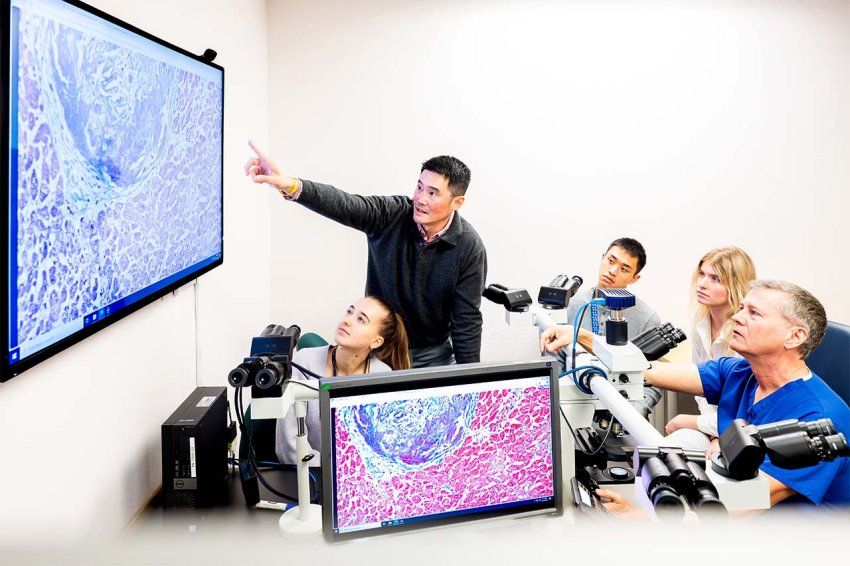
In the meantime, Tseng’s team of research coordinators and trainees collected medical records, paramedics’ reports, family interviews — anything to help determine a definitive cause of death. Every week, the team met with Moffatt and a panel of medical specialists, including experts in pathology, cardiology, neurology, genetics, and infectious diseases, to review the latest cases. Jeffrey Olgin, MD, who today is UCSF’s chief of cardiology and the Ernest Gallo-Kanu Chatterjee Professor, sat on the panel during the project’s early days. He was surprised how often the group felt confident they knew what had killed a person — until they saw the autopsy report. “It was like, ‘Oh! We’re really bad at guessing the cause of death,’” Olgin says.
One of the earliest cases was a 74-year-old man who had been a patient of Tseng’s. In the weeks before he died, he was admitted to the hospital with bronchitis and a high fever. The attending physician also noted that his heart was fluttering sporadically, a symptom of a previously diagnosed condition and a harbinger of sudden cardiac death. Rightly concerned, he consulted Tseng: Could he implant a defibrillator immediately? But Tseng was worried the patient was still too ill from the bronchitis to handle the procedure, so recommended scheduling it after the man was discharged.
“Two weeks later, he went home, and his wife found him dead the next morning,” Tseng recalls. “I felt terrible. I thought I had missed the opportunity to save him.” But when Moffatt conducted an autopsy on him, she found half a gallon of fresh blood in the man’s digestive tract. What had killed him was something no one could have surmised: a rupture of his bowel.
Covert Killers
That case was one of many that would challenge medical understanding of sudden death. When Tseng’s team published their three-year findings in 2018, the results were stunning. A few hundred cases, it turned out, did not qualify as sudden deaths; upon closer inspection, the victims had been symptomatic for hours or days before they died. Of the more than 500 cases that remained, just over half — 56% — were true cardiac arrests. Another 4%, although they concerned the heart, resulted not from an electrical failure but from catastrophic structural damage, such as a tear in the heart’s wall. That left 40% for which the heart was not culpable at all.
Of those noncardiac cases, drug overdoses made up the largest portion — 14% of sudden deaths overall. They had been easily overlooked, as no drug paraphernalia or other signs of substance abuse were observed. “You would never have known without doing the toxicology,” Tseng says. He describes a representative case involving a 71-year-old man. His wife found him unconscious and called 911, but he could not be resuscitated. Because the man had a history of heart problems, for which he took a suite of medications, cardiac arrest seemed the most probable cause. “Well, in fact, his fentanyl level was double the lethal threshold,” Tseng recounts.
“Overdoses are happening to people in their 60s, 70s, 80s,” he says. “And not just with illicit drugs but also prescribed drugs. Nobody ever thinks of that.” Extrapolating from the San Francisco data, he estimates that about 60,000 overdose deaths are missed yearly in the U.S. According to the Centers for Disease Control and Prevention, the number of annual overdose deaths in the country has climbed from around 40,000 in the early 2010s, when Tseng’s study began, to over 100,000 in recent years, a rise driven largely by the opioid crisis. If his projections are correct, its fallout may be even worse than experts have recognized.
Tseng suspects that mortality statistics also underestimate deaths from neurological causes, by as many as 25,000 per year in the U.S. In San Francisco County, these deaths comprised the second biggest category of sudden noncardiac deaths, accounting for 5% of all sudden death cases. The causes, determined through autopsy or by ruling out other possibilities, included strokes, brain aneurysms, and epilepsy. “All those deaths, which had been masquerading as cardiac, were actually
neurologic,” Tseng says. The finding was so striking that he coined a new term to describe the category: sudden neurologic death.
Next were infections, at 4% of sudden deaths in San Francisco County, followed by pulmonary embolisms, gastrointestinal hemorrhages, aortic tears, endocrine crises, kidney failures, and other motley causes. On a national scale, they added up to tens of thousands of annual deaths, all misattributed to cardiac arrest. “If you look under the hood at what really kills people, it changes the epidemiology of everything,” Tseng says. The sudden death iceberg didn’t just hide coronary disease; it harbored a whole host of uncharted threats.
Our knowledge of death is far more limited than physicians like to admit.”
Orrin Devinsky, MD
“Our knowledge of death is far more limited than physicians like to admit,” says Orrin Devinsky, MD, a neurologist at New York University who has collaborated with Tseng to better understand sudden death in patients with epilepsy. Devinsky has found that condition to be frequently overlooked as a cause of death because it’s not detectable in an autopsy. “It’s an issue of resource allocation,” he says. “If we believe most sudden deaths in America are due to heart disease, we’re going to continue to mainly fund heart disease research, and other causes of death will get underfunded because they don’t get counted.”
Arriving Full Circle
The chance of surviving an actual cardiac arrest remains abysmally low — less than 1 in 10 by most estimates. For noncardiac causes of sudden death, Tseng’s research suggests the chance is even lower: in San Francisco, 1 in 50 overall and zero for neurological causes in particular. This makes sense, he says, because if paramedics assume you are in cardiac arrest, they will try to resuscitate you with a defibrillator and CPR and, if you are still alive, whisk you to a hospital specializing in heart emergencies — none of which helps if you actually are having a stroke.
So, what to do? Tseng maintains that risk factors identified in his autopsy study could help emergency responders give more accurate diagnoses and care during noncardiac crises. For example, “if you are a woman, if you had a prior stroke, and if you are on an anticoagulant, there is a much higher likelihood of a neurologic cause,” he says. “So, if all three apply, then you should get triaged to a neurology center.” Tseng’s studies have similarly informed guidelines for treating drug overdoses that may be confused with cardiac arrest. “If we make a dent in some of these cases, it could make a big impact on the overall survival rate,” he says.
Some cardiologists and sudden-death researchers note that additional studies in other communities will help determine how broadly the San Francisco findings apply. Still, Tseng’s autopsy study, which remains ongoing, has brought necessary attention to the complexities of sudden death. “I think Zian is right that we are overestimating the number of cases related to the heart,” says Eloi Marijon, MD, PhD, MSc, a cardiologist at the University of Paris who leads an international commission on sudden cardiac death of which Tseng is a member. “If our goal is to prevent sudden cardiac deaths, we need to understand the underlying factors because otherwise, our efforts will be misplaced.”
Earlier this year, Tseng’s team published in the Journal of the American College of Cardiology (JACC) a pair of papers, based on 12 years of autopsy data, that upheld the 2018 findings and delved deeper into confirmed cases of sudden cardiac death. Strikingly, one of the papers revealed that only 37% were attributable to heart attacks from clogged arteries — less than half of what has long been believed. The remaining 63% of causes included heart attacks despite clear arteries, chronically high blood pressure, problems with the heart muscle or valves, and electrical disorders.
“You and your colleagues have revisited one of the most enduring assumptions in cardiovascular medicine and shown clearly that it no longer reflects reality,” wrote Harlan Krumholz, MD, a cardiologist at Yale University and the JACC’s editor-in-chief, in an email to Tseng accepting the manuscripts.
In the other paper, Tseng’s team reported that evidence of disease had been missed in two-thirds of fatal cardiac arrest cases — including known risk factors like prior heart attacks, as well as more subtle pathology like increased heart weight or size. (“The dirty truth is that many people just don’t have medical care,” Tseng says.)
“Collectively, these studies redefine both the mechanisms of sudden death and the limitations of current prevention paradigms,” Krumholz concluded, praising the work as “exceptional” and “field-shaping.”
More revelations have emerged over the past decade. When Tseng’s team analyzed cardiac deaths in people with pacemakers or implanted defibrillators, they discovered that half were caused by a technology malfunction, such as a broken wire or faulty sensor algorithm. “The failure rate for these devices is much higher than what the companies say,” Tseng points out. Other studies showed that sudden cardiac death was more prevalent in people who are HIV-positive (which is thought to induce chronic inflammation that scars the heart and other organs) or who are homeless. “We need to expand the lens through which we’re looking at sudden cardiac death, from a narrow focus on coronary blockages to all these other conditions,” Tseng says.
Recently, he began exploring genetics again. “So, my work has come full circle,” he says. Having separated actual cardiac deaths from spurious cases, he can finally do what he had intended to all along: investigate the biological drivers of cardiac arrest. “One of the most vexing problems in our field is, why do you die suddenly today?” he says. “Why not yesterday? Why not next year?” Cardiologists know that scarring, whether from a virus or heart disease, can provoke arrythmias. But what turns them deadly?
In a 2024 paper, Tseng’s team offered a tantalizing clue. Examining autopsied heart tissue from more than 1,200 sudden deaths, they identified aberrant gene processes that appear to trigger cardiac death by laying down new scars over old ones. If this discovery leads to imaging or blood tests that can predict cardiac arrest, Tseng says, it would be a medical breakthrough.
Life After Death
Science could not save Celina Schouten’s cousin, but it may yet save the lives of some of those she left behind. A few weeks after Karen died, her family received her autopsy report. The paramedics had been right in her case: It was cardiac arrest. Subtle scarring, disorganized heart cells, and a thickening of her cardiac muscle all pointed to a heart-weakening condition called cardiomyopathy, although Karen had never been diagnosed with it.
Image
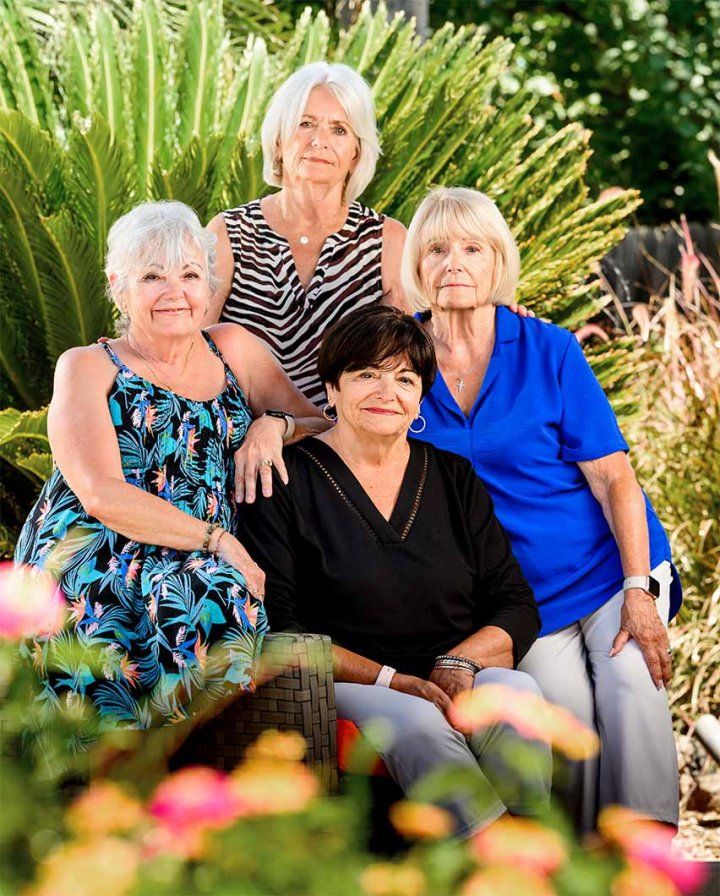
“That was quite a shock,” recalls Schouten, now 72. Many of her relatives had died from the disease, so she knew it ran in the family. But she had never realized it could kill so swiftly and unpredictably. Afraid she might also be at risk, Schouten had her genes tested and, after learning she carried a cardiomyopathy variant and developing other symptoms, decided to have a defibrillator implanted.
“I believe God knows when we’re going to die,” she says. “But I also believe that, through medicine, He gave me this chance to hopefully gain a few extra years.” At her urging, many of her siblings and cousins and their kids and grandkids also took genetic tests, joining the thousands of grieving family members who, in knowing for certain what caused their loved ones’ deaths, have acquired new insight into their own health.
Then, two years ago, Schouten’s brother collapsed and died in his art studio in Merced County. He was 61 years old — the victim of another sudden death that looked like cardiac arrest. But, perplexingly, he didn’t carry the cardiomyopathy gene. Was it a different heart condition? Something else entirely? No one ever found out because an autopsy was never performed.