
Is Testosterone a Miracle Hormone?
Politicians, influencers, and telehealth startups want you to think so.
Image
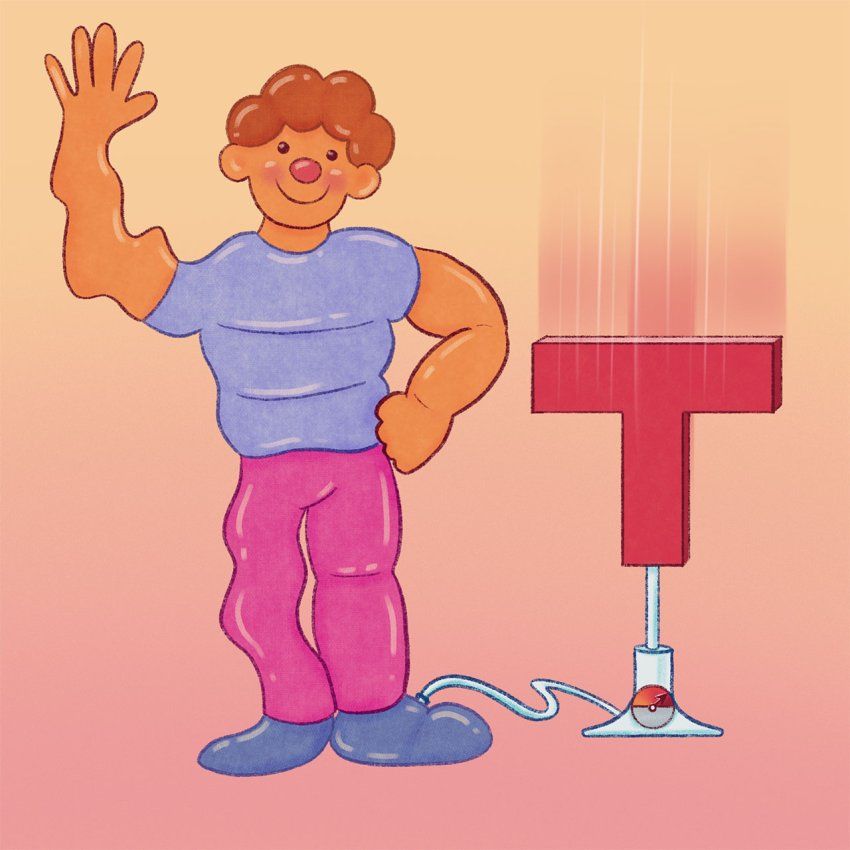
Testosterone is having a moment. Politicians tout it as a pillar of vitality. Telehealth startups sell it like a subscription service. But much of what the public hears about testosterone is incomplete, oversimplified, or flat-out wrong.
We asked two sexual health specialists — urologist Alan Shindel, MD, MAS, and ob-gyn Tami Rowen, MD ’09, MS ’07 — to bust the most persistent myths about testosterone therapy.
Myth #1
Men’s testosterone levels are in crisis.
Scroll through enough health news, and you’ll come away believing that modern men are in the grip of a testosterone emergency — that environmental toxins, processed foods, and sedentary lifestyles have sent male hormone levels plummeting at an alarming rate.
Shindel isn’t buying it.
True, rising rates of obesity and sedentary behavior aren’t doing testosterone any favors. As people become heavier and less active, there’s reason to believe these changes could be dragging down average hormone levels. However, that’s a broad health problem, not a testosterone-specific crisis. “The ramifications of obesity and sedentary lifestyles go well beyond testosterone,” says Shindel, a professor of urology.
In other words, the trend is real but overhyped. A long-running study found average testosterone levels have dropped roughly 1% per year over the past two decades. The decline shows up even in young men with healthy weight, so obesity and inactivity explain part of the downturn, but not all of it. Environmental pollutants, changes in sleep patterns, and shifts in diet are all under investigation as additional explanations. It appears to be a generational drift with no single villain.
Myth #2
Men hit a testosterone “cliff” at middle age.
In women, estradiol levels really do drop off sharply at midlife. But men experience hormone changes differently. For them, it’s a slow, steady downhill slope that begins well before middle age and continues for the rest of their lives. Sudden drops can happen due to an injury to the testicles or certain medical treatments, but these are exceptions, not the rule.
It’s tempting to think that maybe if we hormone ourselves up, we’ll be eternally young, but that’s not the case.
Alan Shindel, MD, MAS
What muddies the picture is that many men start feeling the cumulative effects of aging in midlife: sleep worsens, stress accumulates, and waistlines expand. “It’s tempting to think that maybe if we hormone ourselves up, we’ll be eternally young,” Shindel says. “But that’s not the case. The public is being fed information about testosterone that is incomplete.”
Myth #3
Testosterone therapy causes heart attacks and prostate cancer.
For years, these two fears dominated conversations about testosterone therapy. But neither is supported by recent evidence.
The decade-old studies behind the cardiac scare had serious methodological flaws. In 2023, the New England Journal of Medicine published a rigorous, large-scale study of 5,200 men with low testosterone who were at elevated cardiovascular risk. It found no significant difference in the rate of heart attacks, strokes, or other major cardiovascular events between patients receiving testosterone and those receiving a placebo.
The prostate cancer fear has an even older pedigree. Doctors have long known that castrating a man with prostate cancer causes the cancer to regress. However, the logical assumption — that testosterone must cause cancer — has not held up to a quarter-century of evidence: In men who are properly screened and monitored, testosterone therapy does not appear to meaningfully increase prostate cancer risk.
That doesn’t mean testosterone is risk-free. It can cause modest increases in blood pressure and raise hematocrit — the proportion of red blood cells in the blood. If hematocrit climbs too high, it can increase the risk of blood clots.
But perhaps the most common adverse outcome, Shindel says, is underwhelming results. “Plenty of people get on testosterone, give it a good try for three to six months, their numbers come up, things look pretty good on paper — but nothing feels different.”
Myth #4
Testosterone is a male hormone.
“Women actually have more circulating testosterone than estradiol,” says Rowen, an associate professor of obstetrics, gynecology, and reproductive sciences. She recalls pushing back on her children’s elementary school for teaching the testosterone-equals-male shorthand — a misconception she also encounters when training medical students. “That’s just not true,” she says.
Yet research on testosterone in women lags decades behind work done in men. Studies examining whether supplementation improves cognition, mood, or muscle recovery in women have mostly come up short, with one exception: Testosterone has been shown to improve libido, particularly in postmenopausal women.
Despite that evidence, there’s no FDA-approved testosterone product for women. Not because it doesn’t show a beneficial effect but because the FDA determined there wasn’t enough long-term safety data, particularly around breast cancer risk. “Viagra was fast-tracked,” Rowen says. “Other medications for men are fast-tracked long before there’s long-term safety data — including testosterone for men.”
And without a product approved for women, it’s hard to run the studies needed to generate the data the FDA wants — a catch-22 that has stalled progress for years. Rowen will consider testosterone therapy for peri- and postmenopausal patients, depending on their symptoms, but with clear caveats: The treatment is off-label, it comes with side effects, and the evidence for many of its purported benefits remains “very equivocal.”
Myth #5
If you have low energy and low libido, it must be a testosterone problem.
Fatigue, flagging sex drive, trouble concentrating, depressed mood — these can be symptoms of many things, including poor sleep, chronic stress, depression, cardiovascular disease, medication side effects, and relationship problems.
“It’s a little chicken-and-egg,” Shindel says. “Are you sleep-deprived and fatigued because you’re low on testosterone? Or is your testosterone flagging because you’re sleep-deprived and fatigued?”
He sees this confusion regularly in his clinic, particularly with erectile dysfunction. Patients arrive expecting a simple hormone explanation. “Well, a lot goes into erections,” he says. “It’s about your vascular health. It’s about your neurology. It’s about the medicines you’re taking. It’s about how you feel about your partner.”
Testosterone affects many biological functions, and deficiency in it correlates with real quality-of-life problems. But correlation isn’t prescription. “It’s not a panacea,” Shindel says. “Plenty of other things are going to cause that same set of symptoms.”
Myth #6
Testosterone boosts male fertility.
Even some doctors get this one wrong.
It sounds intuitive: Testosterone is the quintessential male reproductive hormone, so taking more of it should boost fertility, right? In fact, the opposite is true.
When testosterone enters the body from an external source, the pituitary gland detects the surplus and shuts off the signals that drive the production of both testosterone and sperm inside the testicles. The result: A man’s testosterone levels look fine on a blood test, but his sperm count can plummet to zero. And the effects can persist well after he stops taking it.
“It is a pretty potent inhibitor of sperm production,” Shindel says. For any man who plans to have biological children — even in the distant future — this needs to be part of the conversation before starting testosterone therapy.
How widespread is the confusion? A striking survey found that a quarter of urologists, when asked how they would treat a man with fertility concerns, said they’d prescribe testosterone. “This is completely, flat-out wrong,” Shindel says. If specialists can get it wrong, it’s no surprise that patients and primary care doctors might, too.