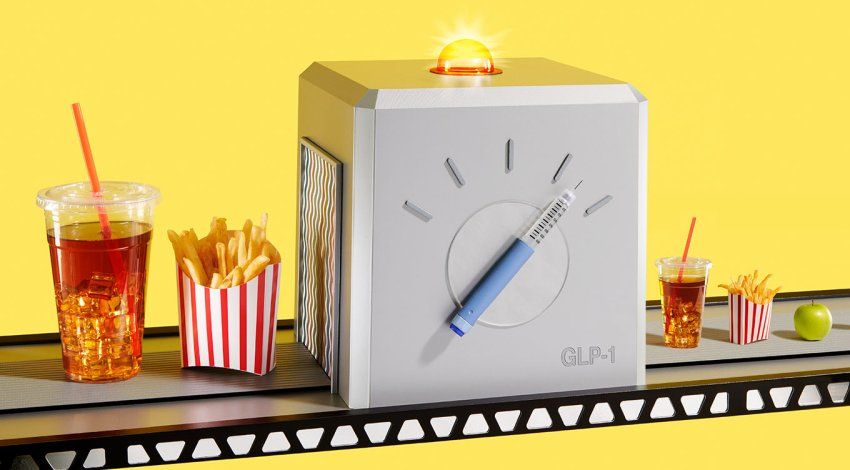

As a physician who treats diabetes and obesity, Suneil Koliwad, MD, PhD, often prescribes GLP-1 drugs — popular weight-loss treatments that reduce cravings for food. When his patients start taking them, some report another change: They drink less alcohol.
One such patient, a retired executive, had long enjoyed a few drinks a week. After he started Ozempic, he found alcoholic beverages so off-putting that he began avoiding social activities involving drinks, such as cocktail hours or Super Bowl gatherings. “He really isn’t interested in drinking anything with alcohol anymore,” says Koliwad, UC San Francisco’s chief of endocrinology and metabolism.
While Koliwad’s patient didn’t need to cut back on his drinking, stories like his have raised an important question about GLP-1s: Could the drugs also dampen cravings for alcohol and other addictive substances, such as tobacco, opioids, cocaine, or methamphetamines? Early studies have sparked avid interest among researchers who study substance use disorders, and anecdotes from patients enrolled in clinical trials are striking. Khaled Moussawi, MD, PhD, UCSF’s Fields Professor of Pharmacology of Addiction in Neurology, says some people prescribed GLP-1s have reported a sudden shift in their compulsion to drink. One patient described the change as “a light switch.” Another told him, “One moment I’m not in control, and another moment I’m in full control.”
Image

The field still faces many unanswered questions — including how the drugs influence craving or consumption — and the patients in ongoing trials don’t yet know if they’re receiving actual GLP-1s or a placebo. In the meantime, physicians in addiction medicine are cautiously hopeful.
“We are in dire need of more options,” says Triveni DeFries, MD, MPH, an associate professor of medicine who specializes in primary care and addiction medicine. “We’re all anxiously awaiting more data.”
A Desperate Need
Substance use takes a tremendous toll. Alcohol use disorder alone affects about 10% of people in the U.S. and causes 178,000 deaths per year. While the number of overdose deaths from opioids declined in 2024, the drugs still kill roughly 50,000 to 60,000 people per year. Addiction can tear families apart and render patients unable to function in their daily lives.
“The social and economic impact of this disorder is catastrophic,” Moussawi says.
FDA-approved treatments exist for some substance use disorders, and “they’re very powerful and they’re very effective,” says DeFries, who practices at Zuckerberg San Francisco General Hospital and Trauma Center. But the medications aren’t widely used, in part because many people hesitate to seek treatment. Moussawi also notes that the drugs don’t work for everyone and sometimes have undesirable side effects. For example, he often prescribes a medication called naltrexone for alcohol use. But in his clinical practice, it helps only about a quarter of patients.
Image
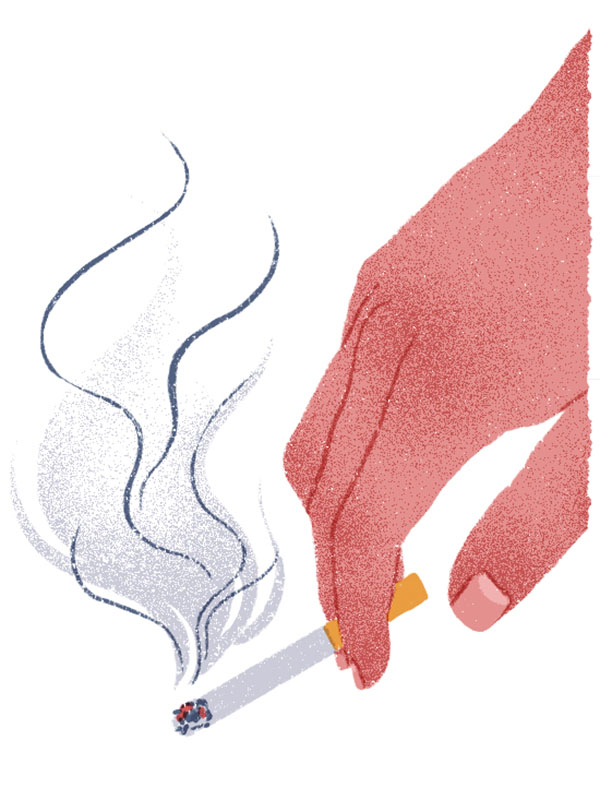
For people with opioid addictions, buprenorphine and methadone can be lifesaving. These medications suppress cravings by targeting opioid receptors in a more stable way — avoiding the sharp peak-and-withdrawal cycle of drugs like fentanyl and heroin. They also reduce the risk of overdose.
“Many people take them, and they work miracles,” Moussawi says. But some of his patients continue using other opioids while in treatment, or they stop the medication after about six months. At that point, he says, “they’re back to where they were.”
When treatments don’t work, “many patients are desperate,” Moussawi says. “They want their lives to be better.” For instance, one patient knew that her drinking was damaging her relationship with her husband and kids. Another patient had developed an opioid use disorder after she was prescribed oxycodone for pain, but she wasn’t able to break the dependency with buprenorphine treatment.
You see a huge need. It’s palpable. You feel it in these people’s stories.”
Khaled Moussawi, MD, PhD
“You see a huge need,” Moussawi says. “It’s palpable. You feel it in these people’s stories.”
And for some substance use disorders, there are no approved medications at all. “We truly have nothing for cocaine or stimulant use disorder,” says Andrew Kayser, MD, PhD, UCSF’s Weinberger Professor of Addiction Research. “We’re not in a place, in my opinion, to be picky.”
Exploring an Unexpected Side Effect
The idea that GLP-1 drugs might treat addictions emerged as patients began reporting that they were drinking less. Observational studies also hinted that people on GLP-1s were less likely to develop a substance use disorder; if they had already been diagnosed with one, they experienced fewer incidents like overdoses or emergency room visits.
Much of the focus so far has been on alcohol use, but the evidence from clinical trials has been mixed. In one study of an older GLP-1 drug called exenatide, researchers reported no decrease in heavy drinking days overall; they saw reduced alcohol intake only among patients with obesity. However, the trial had a high dropout rate, which might have biased the results.
“It’s an interesting study, but not nearly definitive,” Kayser says.
In a more recent trial led by researchers at the University of North Carolina at Chapel Hill, scientists invited people with a history of heavy drinking to a hospital room resembling a dorm; some participants had received weekly injections of Ozempic. Each person was offered their favorite alcoholic beverage as they sat in a comfortable chair and watched a video.
The people on Ozempic drank less alcohol than those not taking the medication, the researchers found. Outside the lab, those participants didn’t report fewer drinking days, but they had fewer drinks on the days they did partake. And they were much more likely to report zero heavy drinking days by the end of the study.
Earlier this year, another team of researchers in Denmark studying people with obesity and alcohol use disorder reached a similar conclusion: The participants using Wegovy drank less.
Even if GLP-1s merely reduce heavy drinking, Kayser believes that shift would still be valuable because it lowers the risk of serious incidents, such as car accidents. In the past, the mentality for treating alcohol use disorder was “abstinence or bust.” Now, many providers focus more on curbing negative consequences. “Just reducing the harms of these substances would be a benefit,” Kayser says.
Dampening Dopamine vs. Feeling Full
These tantalizing early results raise an unresolved question: How, exactly, might GLP-1 drugs reduce intake of alcohol and other substances? Some researchers believe that the medications work primarily by increasing satiety, while others suggest that effects on the brain’s reward system play a more important role. The mechanism matters: The first points toward GLP-1s as a limited tool that’s useful mostly for reducing drinking, while the second opens the possibility of a multipurpose drug that could treat many forms of addiction.
Image

GLP-1 drugs mimic the natural GLP-1 hormone that our bodies produce when we eat. In the intestines, the hormone slows stomach emptying so nutrients can be absorbed. In the pancreas, GLP-1 boosts insulin release, which helps control blood sugar levels. And cells in the brainstem release the natural version of the hormone throughout the forebrain to inhibit food intake.
The drugs’ weight loss effect occurs mainly through the brain, but they work differently from natural GLP-1, according to Zachary Knight, PhD ’05, a professor of physiology who studies the regulation of hunger. The drugs seem to have trouble reaching deeper areas of the brain, but they could still act on regions where the blood-brain barrier is weaker and influence eating or substance use.
Some scientists hypothesize that GLP-1s diminish cravings by reducing reward signals in those parts of the brain. Whether someone’s scarfing a pint of ice cream or reaching for another cigarette, “there’s a lot of overlap in those two behaviors,” says Ashley Mason, PhD, an associate professor of psychiatry at the UCSF Osher Center for Integrative Health who studies food cravings. Ultra-processed foods and drugs like cocaine both trigger huge reward signals. “They’re super-stimuli we did not neurologically evolve to contend with,” Mason says. Neurons release dopamine molecules to various brain regions, essentially sending the message, “Let’s do that again.”
When mice are given a GLP-1 drug in a lab, they release less dopamine in response to food. One key brain region that receives dopamine signals is the nucleus accumbens, which controls the hedonic drive to eat — leading us to eat even after we’re full because of the pleasure, comfort, stress reduction, or childhood memories associated with food. So weaker dopamine signals may tamp down the tendency to overeat.
And the nucleus accumbens “doesn’t just create reward around food,” says Koliwad, who holds UCSF’s Grodsky/JAB and Woeber-Mount Zion Distinguished Professorships.“It creates rewarding feelings around a whole host of addictive behaviors.” If GLP-1s reduce signaling there, many kinds of reward-seeking and cravings — as well as addictive behaviors like gambling — might subside with it.
Some clinicians worry that if GLP-1s curb appetite in this way, the medications could also weaken people’s motivation in general. Some of Koliwad’s patients have told him that they’re less enthusiastic about activities they used to enjoy, and their emotions have flattened out. But large-scale studies don’t suggest an increased risk of depression due to GLP-1 drugs. “If anything, it’s the opposite,” Knight says.
Image
Debate about how the medications function in the human brain is far from finished. Knight is skeptical that reward signals are the most important pathway that GLP-1s influence. “Most of what these drugs are doing has nothing to do with dopamine,” he says; instead, the medications likely cause weight loss by making people feel satiated. GLP-1s bind to receptors in a small brain region called the area postrema, prompting signals that control appetite. As a result, people feel full faster when they eat, and they don’t think about food as much between meals.
Kayser recalls a patient who took a GLP-1 for obesity and diabetes. “It made him feel like it was 45 minutes after Thanksgiving dinner every day,” he says.
Ultimately, if GLP-1 drugs primarily reduce reward signals, they could perhaps treat many types of addictions. But if they mostly affect satiety, it’s not clear whether they would work for addictions to substances beyond alcohol, Kayser says.
“Alcohol has calories,” Knight explains. “Alcohol is a food.” If you feel sated, the thought of downing a beer or cocktail won’t seem as appetizing. But if you have a cocaine addiction, for example, feeling full might not factor much into your decision to use more.
Still, Kayser speculates that a feeling of being “done” could extend beyond food and drink to other substances. “Maybe you’ve had enough of everything,” he says.
Waiting for Data
Many clinical trials are now underway to test the effects of GLP-1s on everything from smoking to cocaine use. One set of studies involves a new drug called brenipatide, which mimics GLP-1 as well as another hormone called GIP. Moussawi is overseeing patients taking brenipatide in trials for alcohol and opioid use, sponsored by the drug’s manufacturer, Eli Lilly.
The demand is tremendous. When Moussawi’s team opened enrollment for two alcohol use trials at the UCSF site, several hundred people expressed interest. “The need far outpaces our ability to screen those participants,” he says.
The alcohol trials will each enroll an estimated 1,100 people diagnosed with alcohol use disorder across more than 100 sites, and researchers are tracking outcomes like drinks per day and severity of cravings. For the opioid trial, which is targeting 465 patients, participants must already be on buprenorphine. Researchers will assess whether the GLP-1 drug is safe for these patients, monitor their opioid use, and determine if they are less likely to drop out of treatment.
The alcohol trials have already yielded some dramatic anecdotal reports. Before starting the trial, one patient had been drinking one and one-half to two bottles of wine a day, usually rosé or Sauvignon blanc. She had sunk into “doom and gloom” last year when a beloved pet suddenly died; she mostly drank alone at home. The day after receiving her first injection, she had a strange feeling that she didn’t need to stop at a liquor store after work, as she usually did. That weekend, she felt “zero desire” to drink.
The patient doesn’t know for sure whether she’s receiving a placebo or the drug. But she hasn’t had more than an occasional glass of wine or nonalcoholic beer at social outings, and she’s going out more: to the ballet, to a bread-baking class. “I feel like a huge weight has been lifted off of me,” she says. Whether these changes can be attributed to brenipatide “is not going to be revealed until the study is over,” Moussawi says.
I feel like a huge weight has been lifted off of me.”
Patient in an alcohol use clinical trial
But even if GLP-1 drugs prove effective for reducing substance use, caveats abound. Laura Schmidt, PhD, MSW, MPH, a professor of health policy, points to known side effects, including gastric upset, nausea, muscle wasting, and pancreatitis. Long-term side effects could become an issue if GLP-1s end up being lifelong treatments. Among patients who have taken them for weight loss, those who stop tend to regain the weight. “Do you have to take the medicine once a week for life, lest you start drinking heavily again?” Koliwad wonders. “Is there an off-ramp?”
And Schmidt — who spent the first couple of decades of her career studying alcohol use, particularly in women and people in poverty — cautions that medication alone will not solve heavy drinking that stems from trauma. Some patients will likely need other interventions to support their recovery, such as psychotherapy or movement therapy. Drugs like naltrexone are “a wonderful adjunct for treating alcohol use disorder, but they are not the be-all and end-all,” she says. Some patients are also dealing with the consequences of decades of heavy alcohol or drug use: lost jobs, estranged families, stints in jail.
Image

“Taking away the drinking is one thing,” Schmidt says, “but that doesn’t guarantee a person’s going to be able to patch back together a life.”
For now, Moussawi is not prescribing GLP-1 drugs for patients with substance use disorders because “the evidence is not there yet,” he says. The brenipatide trials for alcohol and opioid use are scheduled to release results around spring 2028. But some people hoping to reduce their consumption of alcohol or other substances aren’t waiting for clinical trial data or FDA approval; they’re seeking off-label prescriptions from online medical providers and experimenting. That raises an equity issue for DeFries, whose patients generally can’t afford to pay out-of-pocket. For example, a patient with alcohol use disorder who also has diabetes might get a GLP-1 drug covered by insurance for the latter. But what about patients who don’t have another qualifying condition?
“We don’t want our patients to be left behind,” she says.
For people struggling with addiction, new treatment options are long overdue. And until new data arrive, many patients who desperately want to stop their substance use likely will continue to relapse.
“We see them again and again,” Moussawi says. “We really ought to do better.”