
Displaying 4711 - 4740 of 17006
-
-
Archive: California Initiative to Advance Precision Medicine Announces New Funding Opportunity
With two projects already underway to find new therapies for children with difficult-to-treat cancer and to help doctors diagnose hospitalized patients with acute infections, the California Initiative to Advance Precision Medicine (CIAPM) is announcing a new round of funding open to a wider range of applicants.

-
Archive: Chancellor Presents UCSF Financial Outlook, Campus Overview to UC Regents
UCSF Chancellor Sam Hawgood and other campus leaders presented a campus overview to the UC Board of Regents on Wednesday, highlighting such topics as diversity, degree completion and UCSF’s financial outlook.

-
Archive: Early Exclusive Breastfeeding Associated with Longer Telomeres in Latino Preschoolers
Infants who are exclusively breastfed early in life are more likely by age 4 or 5 to have longer telomeres, the protective bits of DNA that cap the ends of chromosomes in cells.

-
Archive: Confronting a Lingering Question About Zika: How It Enters the Womb
-
Archive: Cutting Sugar Rapidly Improves Heart Health Markers
-
Archive: Childhood Cancer Hijacks Cellular Quality Control System to Fuel Growth
A serious childhood cancer takes advantage of a quality control mechanism that usually protects cells from stress-induced damage to propel tumor growth, according to a new study led by researchers at UC San Francisco and the University of Pittsburgh.
-
Archive: Cutting Sugar Causes Drop in Heart Disease Risk Factors Among Obese Children
Reducing sugar consumption in obese children, rather than cutting calories or starch, or losing weight, leads to a sharp decline in triglycerides and a key protein called ApoC-III – two features that are associated with heart disease in adulthood.

-
Archive: UCSF Shows Up Big for AIDS Walk’s 30th Anniversary
Hundreds of staff, faculty, students and supporters of UCSF braved a blustery morning in Golden Gate Park to participate in AIDS Walk San Francisco’s 30th anniversary.

-
Archive: Researchers Map Zika’s Routes to the Developing Fetus
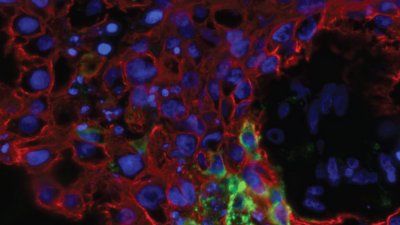
Zika virus can infect numerous cell types in the human placenta and amniotic sac, according to researchers at UCSF and UC Berkeley who show in a new paper how the virus travels from a pregnant woman to her fetus.
-
Archive: Popular Mobile Health Apps Fail to Serve Vulnerable Populations
A new UCSF study of top-rated mobile health apps showed that they offer little help to vulnerable patients – those who might benefit the most from these tools.

-
Archive: Go-Between Immune Cell is Key to Priming the Body’s Fight Against Cancer
Using advanced imaging technology that allowed them to spy on interactions among cells in the lymph nodes of living mice, a research team led by UCSF scientists has identified a cell that is a key player in mounting the immune system’s defense against cancer.
-
Archive: UCSF Develops Program to Help San Francisco Workers Deal with Stress on the Job
A program that was developed through UCSF's School of Pharmacy has taught hundreds of San Francisco city workers stress management through workshops.

-
Archive: Zika Infection May Be Masked by Other Viral Infections
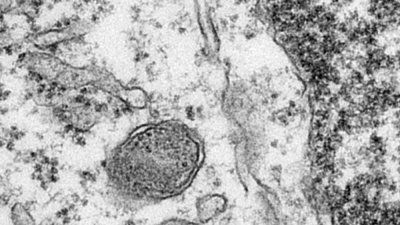
Symptoms of infection with the Zika virus in Brazil may be masked by simultaneous infection with other mosquito-spread viruses common in the same region — such as dengue fever and chikungunya viruses — pointing to the need for comprehensive testing, according to a study led by a UCSF expert in DNA-based diagnostics in collaboration with Brazilian researchers.
-
Archive: UCSF to Train Residents in Lean Management and Process Improvement
UCSF will train medical residents and fellows in Lean management principles, as part of a broader institutional commitment to continuous quality improvement.
-
Archive: ‘Early-Term’ Births Significantly Increase Risk of Preterm Births, Says Study
A new study led by UCSF researchers found that women whose first child was born at 37 to 38 weeks – so-called “early-term” birth – are two to three times more likely to experience preterm birth, defined as birth at a gestational age less than 37 weeks, when giving birth to a second child.

-
Archive: UCSF Researchers Using Tarantulas to Study Pain
-
Archive: Do Alternative Treatments for Autism Work?
-
Countdown to a Cure: The Effort to Finally Defeat AIDS
Spurred by three decades of momentum and fresh funding, UCSF scientists mount a major effort to finally defeat AIDS.

-
Gina Intinarelli, MS, PHD ’13: The nurse as activist
Gina Intinarelli, MS, PHD ’13, never loses sight of her nursing roots.
-
Archive: Covert Inflammation May Trigger Many Forms of Cancer
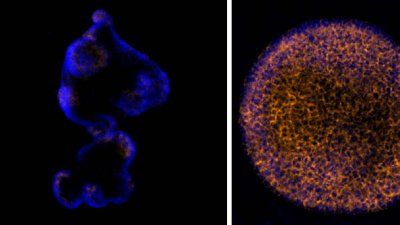
A previously unidentifiable type of low-grade inflammation may explain why common anti-inflammatory drugs such as aspirin have shown promise against some types of cancer – even when patients don’t display typical signs of inflammation.
-
Archive: Water Dispensers, Cups Encourage School Children to Drink More, Study Shows
School children drink more water if the traditional water fountain is replaced by a dispenser with cups, according to findings of a study led by researchers at UCSF.

-
Weighing the Costs of Care
A new effort at UCSF seeks to increase the appropriate use of care.

-
Healthy Aging
Several UCSF experts weigh in on how to thrive as an older adult.

-
Archive: Genetic Risk for Obesity Grew Stronger in ‘Obesogenic’ Environment
Lending support to the idea that high-calorie diets, sedentariness and other aspects of the contemporary American lifestyle may be driving the obesity epidemic, UCSF researchers have found that people who carry greater genetic risk for obesity were more likely to have a higher body mass index if they were born later in the 20th century.
-
Looking for a Better Way to Die
Six UCSF health care experts share what California’s new End of Life Option Act law might mean for patients and providers.

-
3-D Virtual Reality Colonoscopy
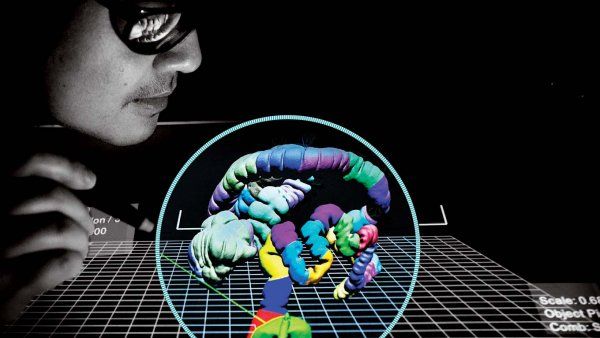
Using advanced 3-D imaging technology, Judy Yee is reinventing the colonoscopy process.
-
Archive: Assessing Risk Helps Dentists Tailor Preventive Treatments for Young Children
Taking patients’ risk of developing dental caries (“cavities”) into account can help dentists effectively tailor individual prevention and treatment efforts, according to a recent study led by researchers from the UCSF School of Dentistry.

-
Archive: How to Get the Best Care From the Hospital Nursing Staff
-
Archive: Board of UCSF Benioff Children’s Hospitals Showcases Strength of Enterprise
The board of directors for UCSF Benioff Children’s Hospitals has recently expanded to reflect the growing reach and impact of the children’s enterprise.