University of California San Francisco
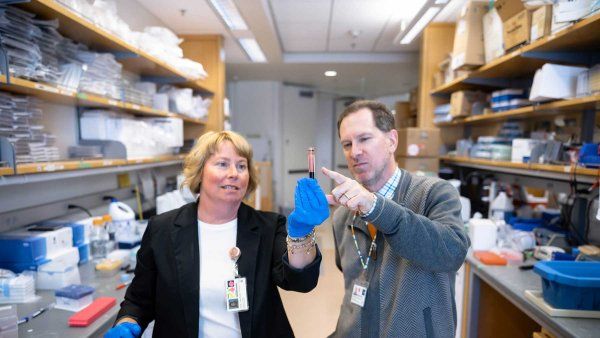
Scientists found a way to identify and possibly treat a mysterious type of bladder cancer that affects up to 1 in 4 cases.
Curious about the future of health care? This UCSF Rosenman Institute podcast explores big ideas like at-home tests for early cancer detection and the next wave of weight loss treatments. Hear insights from the front-line innovators and entrepreneurs tackling health’s biggest challenges.
What do Tinder and the immune system have in common? Both swipe to find the perfect match, but instead of love, the immune system is hunting virus-infected cells. UCSF PhD student Sophia Miliotis explains it all in her clever, three-minute Grad Slam talk – and made history as UCSF’s first-ever winner of the UC-wide competition. Watch it now on UCSF’s YouTube channel.
UC San Francisco’s ties to AIDS Walk San Francisco go back decades. But the funds raised at each event, including this year’s walk, will advance critical HIV research, care, and programming at the
Bonnie Tsui’s latest book is a “celebration of musculature ... vivid, thought-provoking, undeniably fascinating,” according to Kirkus Reviews. She researched it by visiting UCSF’s Anatomy Learning Center with Amber Fitzsimmons, DPTSc ’13, chair of physical therapy, as her guide, uncovering how the perception of muscle shapes cultural ideas of power and beauty.
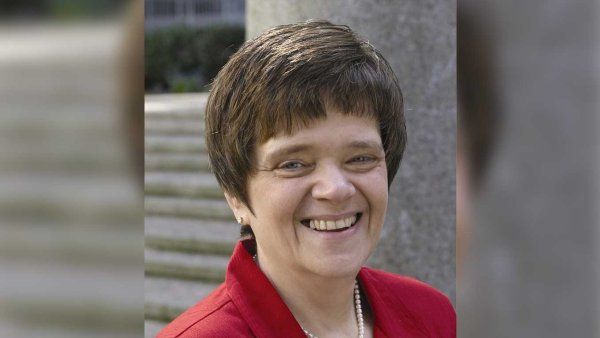
Maria Lopez, PharmD ’01, didn’t just want to own a pharmacy – she wanted to redefine what one could be. “I wanted to create something different, something more personal,” says Lopez, the 2025 Alumni Humanitarian Service Award winner.
“With this piece, I wanted to reflect the creativity and collaboration that make offering care to these children possible,” says artist Rachel Howard of her collage. It depicts a UCSF School of Dentistry partnership that uses telehealth to bring preventive dental care to kids in rural schools.
The School of Pharmacy’s Joanne Chun, PharmD ’93, PhD ’96, leads a new master’s degree program focused on AI’s transformation of drug discovery and development.
Researchers and clinicians are advancing the science of sight to ensure the health of these complex and crucial organs.
What scientists are learning about weed’s health effects might come as a surprise.
An expert in cognitive neuroscience shares the ways that music may help flex our neurons, plus her top tips for a music-filled life.
Neuroscientist Grae Davis, PhD, unpacks why public understanding of science matters.
The Oscar of science: Stephen Hauser’s dogged determination to defeat multiple sclerosis has earned him a Breakthrough Prize, one of science’s top honors.
UCSF researchers are scouring millions of compounds – with help from tiny zebrafish – to create anesthetics safe enough to use without an anesthesiologist.
A transformative program is changing health care and lifting up communities, one future doctor at a time.
Scientists are working to rewire the brain’s pain pathways and unlock lasting relief.
Microplastics have infiltrated our bodies. What does that mean for our health?
Got back pain? Spine surgeon Patricia Zheng, MD, answers questions about how to reduce your pain and, hopefully, avoid surgery.
A study showed that daily "micro-acts" promote wellbeing and health. These include acts of kindness, self-reflection, gratitude, positive reframing, and experiencing awe.
Health trackers keep tabs on nearly 1 in 4 Americans at this point. Professor of Medicine Sandeep Kishore, MD, PhD, MSc, answers questions about the future of these ubiquitous gadgets and the data they collect, share, and analyze.
In one of the largest studies of its kind, researchers identified the U.S. regions where dementia occurs most often.
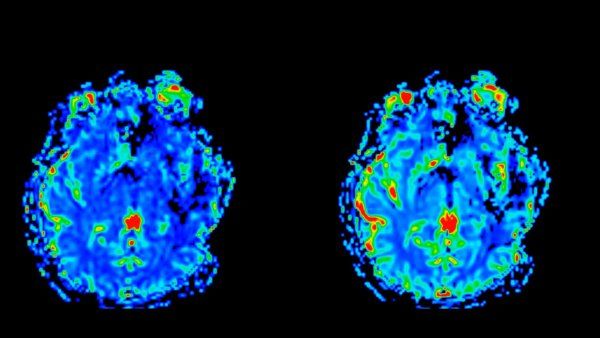
Medical imaging scans that create detailed images of the body’s internal structures are widely used in medicine. Doctors need them to detect and manage certain types of cancer, assess the extent
An off-the-shelf drug developed for smallpox, a cousin of mpox, proved safe for mpox patients but ineffective at curing the disease. But the clinical trial itself, launched rapidly as cases spread in 2022, could be a model for similar current and future epidemics.
In pancreatic cancer, metastasis is often the first sign that a patient even has cancer, and by then, the cancer has spread out of control. Researchers discovered how pancreatic cancer cells migrate to other organs, where they become dangerous enough to kill.
Oncology specialists from UC San Francisco will present new clinical research findings and cutting-edge treatment strategies at the 2025 American Society of Clinical Oncology (ASCO) Annual Meeting,