Displaying 3361 - 3390 of 17006
-
-
Archive: Drug Hobbles Deadly Liver Cancer by Stifling Protein Production
In laboratory experiments, UCSF researchers successfully beat back the growth of aggressive liver cancers using a surprising new approach.
-
Archive: Life-Threatening Lung Disease Averted in Experimental Models
UCSF discovery that may lead to new treatments for people with IPF.
-
Archive: Parents Often Unaware of Kids' Suicidal Thoughts
-
Archive: California Faces A Growing Threat From The Deadliest Drug In America
-
Archive: Ultra-Sturdy Bones, with a Surprising Origin, Suggest New Osteoporosis Approach
A handful of brain cells deep in the brain may play a surprising role in controlling women’s bone density.
-
Archive: Calcium Specks May Help Detect Heart Disease in South Asians
Specks of calcium in the heart’s artery walls could be an important prognostic marker of early cardiovascular disease in South Asians and may help guide treatment in this population.

-
Archive: Doctor lays out need-to-know basics on vitamins, supplements
-
Archive: Virtual reality allows neurosurgery patients to ‘tour’ their own brains
-
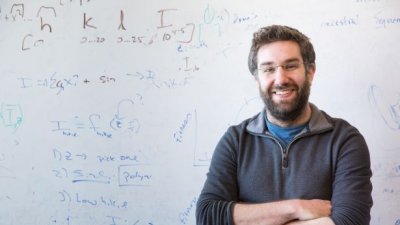
Archive: James Fraser Selected as Bowes Biomedical Investigator
As a program investigator, James Fraser will receive $1.25 million over the next five years to support his research and teaching.
-
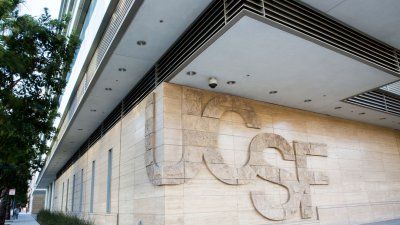
Archive: Henry Wachs, Award-Winning Creator of the UCSF Logo, Dies at 102
Henry Wachs, famed Bay Area graphic designer and creator of the original logo for UC San Francisco in the 1970s, died on Dec. 21. He was 102.
-
Archive: Why doctors are worried about the Apple Watch EKG
-
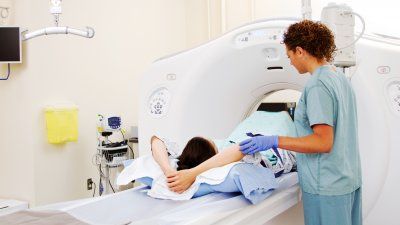
Archive: Radiation Dose in CT Scans Varies Due to Scanners’ Technical Settings
The amount of radiation that patients are exposed to from CT scans varies widely between institutions and countries, and is largely due to differences in the technical settings of the scanning machines.
-
Archive: From Doctor to Patient, An Oncologist's Journey with Breast Cancer
-
Archive: Radiation Doses From CT Scans Vary Widely
-
Archive: For older black men, a lifesaving push for more prostate cancer tests
-
Archive: The world's oldest esports team is gaming their way to longer lives
-
Archive: Surprise Discovery Reveals Second Visual System in Mouse Cerebral Cortex
New study shows the post-rhinal cortex, appears to obtain visual data directly from an evolutionarily ancient sensory processing center at the base of the brain called the superior colliculus.

-
Archive: Artificial Intelligence Turns Brain Activity into Speech
-
Archive: Gut Immune Cells Cut Inflammation in Multiple Sclerosis
Researchers have discovered that the intestine is the source of immune cells that reduce brain inflammation in people with MS, and that increasing the number of these cells blocks inflammation entirely.

-
Eric Topol, MD, Resident Alum: Leveraging Technology to Democratize Health
Cardiologist Eric Topol is turning the medical establishment on its ear with his vision of a democratized health care system driven by patients and empowered by “medicalized” smartphones.
-
Twisting Fate: My Journey with BRCA
UCSF oncologist Pamela Munster, MD, has advised thousands of women on how to deal with the life-altering diagnosis of breast cancer. But when she got a call saying that her own mammogram showed irregularities, she found herself experiencing a whole new side of the disease. Munster’s book weaves together her personal story with her team’s research on the BRCA gene, which is responsible for breast cancer and many other inherited cancers.
-
Carry the One Radio: “Jazz Bands and MRI Scans: How Brains are Creative”
Have you ever wondered what’s going on in a musician’s head while they improvise? In this episode, Charles Limb, MD, a UCSF surgeon and neuroscientist, explores the process of creativity by scanning the brains of jazz musicians and rappers as they improvise. Tune in to learn what brain processes allow creative thought and why creativity matters.
-
UCSF’s Mini Med School for the Public
Learn what goes on every day in UCSF’s classrooms and labs from the same faculty who are on the front lines, teaching students in the health professions. These courses for the rest of us delve into everything from the science of sleep to the biological basis of back pain to the latest studies on brain plasticity. Attend in person or watch past lectures online.
-
Archive: Artificial intelligence can detect Alzheimer’s in brain scans six years before a diagnosis
-
Archive: The Dangerous Rise of the IUD as Poverty Cure
-
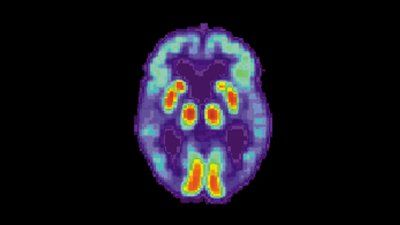
Archive: Artificial Intelligence Can Detect Alzheimer’s Disease in Brain Scans Six Years Before a Diagnosis
UCSF researchers programmed a machine-learning algorithm to diagnose early-stage Alzheimer’s disease. The algorithm used PET scans – a common type of brain scan.
-
Archive: Scheduled dialysis for undocumented immigrants saves money and lives
-
When Ordinary Becomes Extraordinary
After Matthew Wetschler broke his neck body surfing, he became the first person to undergo a new protocol –pioneered by a UCSF surgeon – for treating spinal cord injuries.

-
We Left Our Homes for a Higher Calling
UCSF cancer researcher Hani Goodarzi, who is from Iran, writes about the human impact of the Trump Administration’s travel ban.