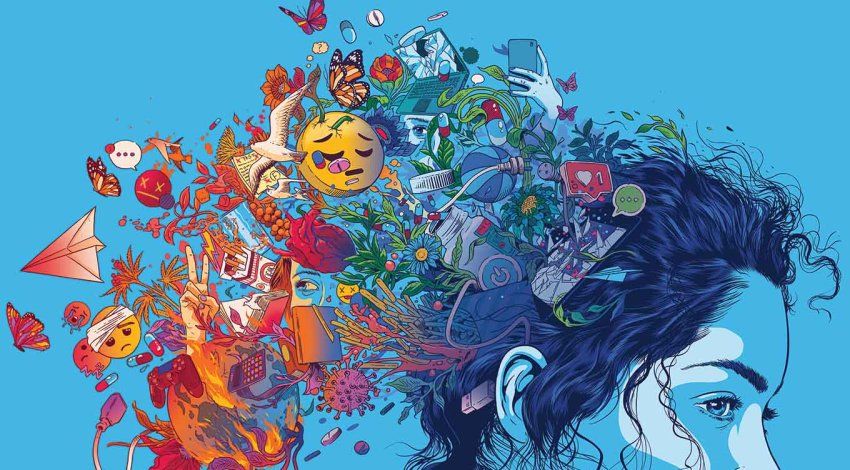

Kermit’s soft body sliced an arc through the air. Always the same sharp curve and then down to the ground. Again, an identical upward sweep. And back down.
The 3-year-old guiding the stuffed toy was saying something. She was telling her mother what she’d seen and how she felt. She wasn’t doing it with words. She was communicating the way all young children do: through play.
Her mother watched her, stunned. To the therapist sitting next to her on the floor, she said, “It was like that. It was exactly like that when he died.”
The girl’s hand was sending Kermit through the same falling arc her father’s body had taken when he was hit by a car months earlier.
No one had talked to her about it. No one had told her what it meant or where her father was. But she had witnessed it. And here she was recreating that moment, revealing how deeply it had affected her.
“There is a very common misconception that at early ages, children are too young to understand when terrible things happen,” says Alicia Lieberman, PhD, director of UC San Francisco’s Child Trauma Research Program and the Irving B. Harris Professor of Infant Mental Health. “People think that at ages 5 and under, kids are too young to know when their parents are overwhelmed with grief and shame. They’re not too young. What they see, feel, and hear lives in them.”
It lives in them mentally and emotionally. And it lives in them physically.
A robust vein of research in stress biology has revealed that early childhood trauma is associated with a host of serious short- and long-term health issues, including diabetes, heart disease, asthma, cognitive decline, immune disorders, and cancer.
Scientists are working to explain exactly how this complex translation from mental to physical health occurs. In recent years, they’ve made enormous strides in understanding epigenetics — the study of the chemical processes that regulate gene activity and expression.
Genetics are the hardwired instructions that define our bodies’ biological operations. We get our genes from our parents. The DNA sequence we inherit from them remains the same throughout our lives.
Epigenetics, on the other hand, reflects our experiences. The epigenome consists of mobile molecular notations that layer onto our DNA. These chemical markers can influence the way DNA works, activating or silencing genes in dialogue with the demands of our surroundings.
Genetics tells the story of who we come from, but epigenetics accounts for what we’ve been through. A scientist can look at a person’s epigenome and know if they smoke, if they stopped smoking, and when. Extended exposure to high glucose levels can introduce epigenetic shifts that lead to type 2 diabetes, while a healthy diet and exercise can influence beneficial patterns in gene expression that prevent cancer. Studies of twins illustrate with striking clarity that DNA isn’t destiny: Siblings with identical genetic sequences can have very different epigenomes when their experiences diverge.
In the case of early childhood trauma, epigenetic research has shown that intense or prolonged emotional stress can speed up aging. This rapid pace of cellular wear and tear can lead to increased risk for serious chronic illnesses years after the trauma has occurred.
All this raises an important question: Can epigenetic science also help us understand which experiences, treatments, and policies truly move the molecular needle back to good health?
Until very recently, we haven’t been able to say for sure.
But in 2025, UCSF psychologist Nicki Bush, PhD, the Pritzker Professor of Developmental and Behavioral Health, published a groundbreaking new epigenetic study that changed that. In partnership with Lieberman’s clinic, she showed that their therapeutic method, Child-Parent Psychotherapy (CPP), helps children’s bodies hit the brakes on the overactive aging process associated with early childhood trauma.
Image
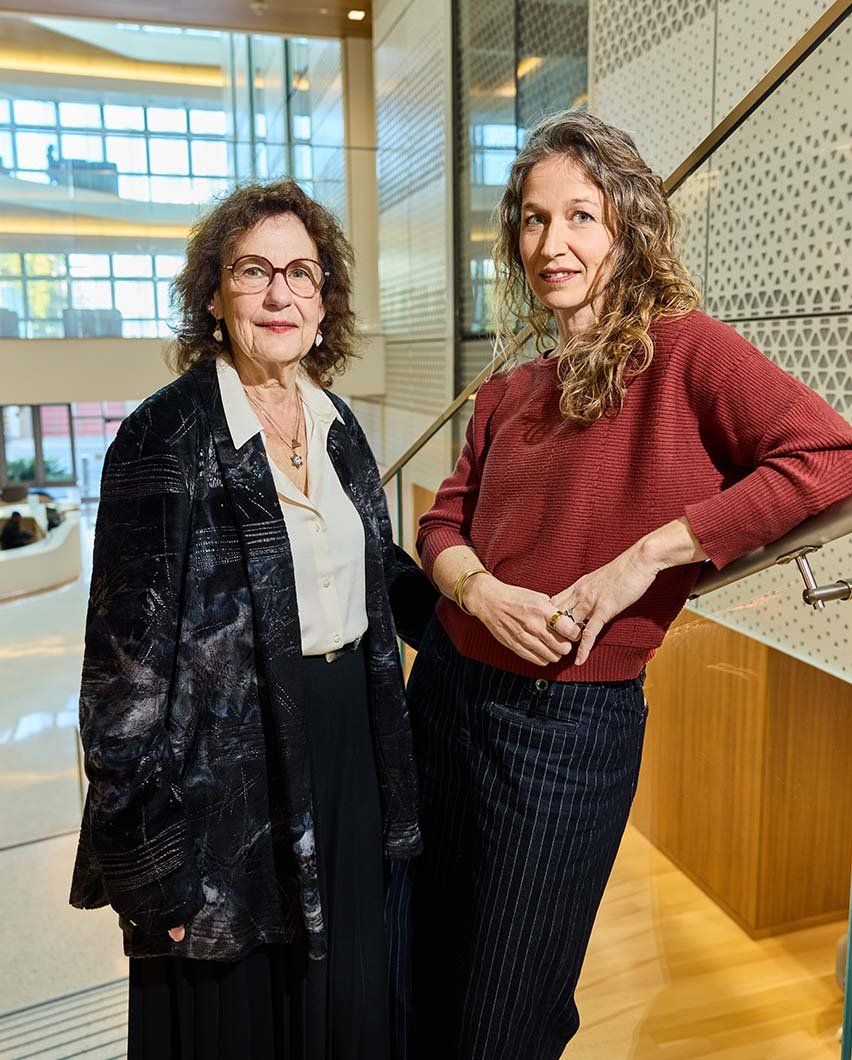
This rigorous experimental research was the first to prove that psychotherapy can slow epigenetic aging. After a year of treatment, kids in Bush’s study had biological ages that tracked measurably closer to their chronological ages, putting them back on a healthy developmental path.
Trauma can stack the odds against us when it comes to our physical health. Bush’s body of work provides hard evidence that we have the power to shift those odds back into our favor.
Her research lies on the cutting edge of a new collaborative field that unites insights from the social and the physical sciences. By bridging disciplines that rarely intersect, Bush aims to unlock bold new possibilities in preventative medicine. “I create ways for the worlds of child psychology and molecular biology to enrich each other,” Bush says. “We’re investigating how to best keep kids healthy — not just while they’re young, but for the rest of their lives.”
A Uniquely Powerful Bond
People like to imagine childhood as a time of innocence or even obliviousness. In reality, it’s more like a hurricane of growth and experience. The quality of our most intimate relationships guides how we make it through that maelstrom and influences the ways we respond to life as adults. Are we navigating safely through the storm with curiosity and support? Or are we surviving it alone, frightened of dangers and unknowns?
“Biology and psychology converge on this core truth: Bodies and minds interpret the world through the lens of what they expect,” says Allie Sullivan, PhD, an assistant professor of psychiatry at UCSF who collaborated on Bush’s publication. “If we feel secure and safe in our environments, we come to expect that. This is ideal for mental and physical health. If we feel deprived or unsafe, we can become stuck in a state where we constantly expect hardship and danger. It preps us for survival. But that perpetual stress response takes a toll on our mental and physical health.”
Image
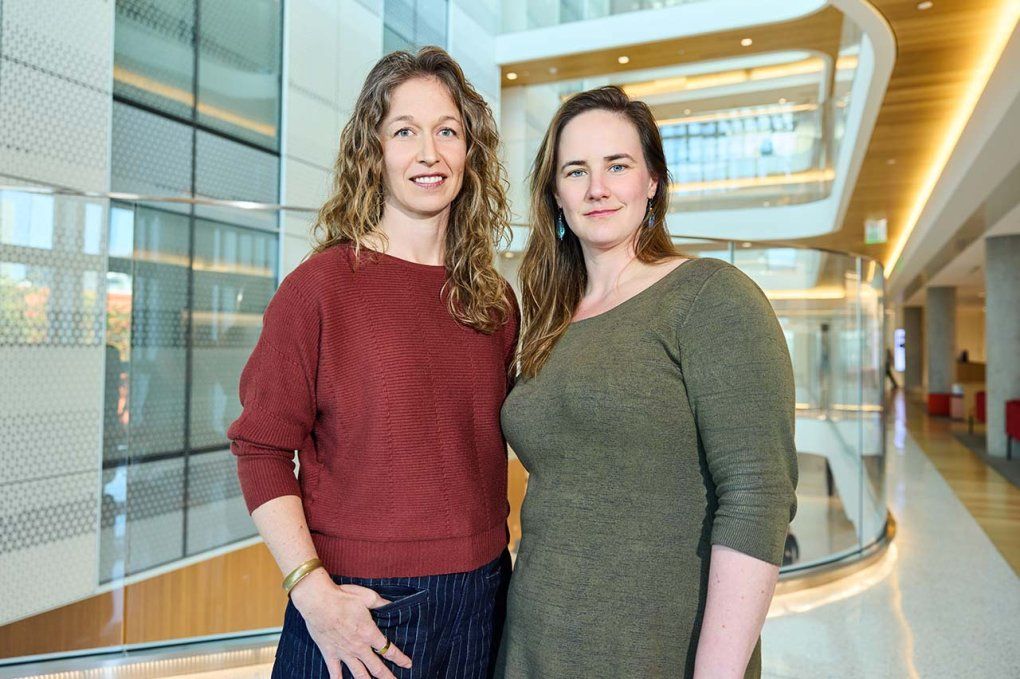
Bush’s work proves that there is an immense biological benefit to CPP’s central aim: helping children shift from an outlook of fear to one of security. Regarded around the world as one of the most effective trauma treatments for children, Lieberman’s therapeutic method restores in kids and their caregivers the expectation of healing and change.
Though we don’t like to think about it, terrible things do happen to small children. The death of a loved one. Neglect. Bullying. Domestic violence. Serious illness. Sexual abuse. Drug use in the family. Car accidents. Wildfires, floods, war.
Kids are ill-equipped to handle such trauma alone. They need their parents’ help to understand what has happened to them. In CPP, the therapist assumes a supportive role, skillfully reflecting feelings and experiences in a way that empowers the parent to take the lead in their child’s recovery. The power of the child-parent relationship makes it possible for kids to create meaning that holds their grief and pain — and allows them to move on.
“The profound nature of this connection is something that anyone can understand intuitively,” Lieberman says. “You can see it in the way a mother and father relate to their baby and vice versa. They reflect each other’s delight, protectiveness, or compassion as well as their disgust, anger, or impatience. At these early ages, there’s a visceral sense that parent and child together constitute one being.”
At these early ages, there’s a visceral sense that parent and child together constitute one being.
Alicia Lieberman, PhD
Without the support of the most important adults in their lives, children can feel alone — even trapped — in traumatic experiences, long after the events occur. They often live with stories that follow a heartbreaking emotional logic. A toddler witnesses her mother being attacked by an intruder; later, in therapy, it’s revealed that she had been blaming herself for not locking the door. A boy loses a sibling and lives in quiet fear of the “bad guys who took his legs.” His parents and therapist realize he was brought to view the half-open casket without explanation.
And, in the most frightening moment of her life, that little girl who saw her father hit by a car was sure she’d been abandoned. Her mother had left with the ambulance that came to rush her husband to the hospital.
In therapy, the girl rolled a toy truck to the very far edge of the rug, a mother figurine enclosed inside. For most of that session, her mother held the girl in her arms, explaining, “I didn’t want to leave you.”
“You didn’t want to,” her child echoed, deep in her embrace.
Windows of Opportunity
Humans grow in bursts. True, we’re always changing. But there are periods of our lives where we truly transform. Adolescence, early childhood, fetal development, and pregnancy are periods scientists and clinicians categorize as windows of extreme “plasticity,” a term that names our extraordinary physical and mental capacities for variation.
Like plastic under heat, we become especially malleable during these key phases of growth. Anyone who’s observed a young child’s uncanny ability to pick up and retain a new language or known a teenager who seems to grow overnight has witnessed our extreme aptitude for change during these periods.
During these phases, we’re also especially open and sensitive to the world around us. On the one hand, we mature following the path of our genetically determined programming. On the other hand, that programming includes the work of interpreting our environment and incorporating it into our systems. The flexibility we’re afforded during these times of change renders us intensely porous. We’re absorbent, drinking in the effects of the people and events closest to us as we develop.
Image
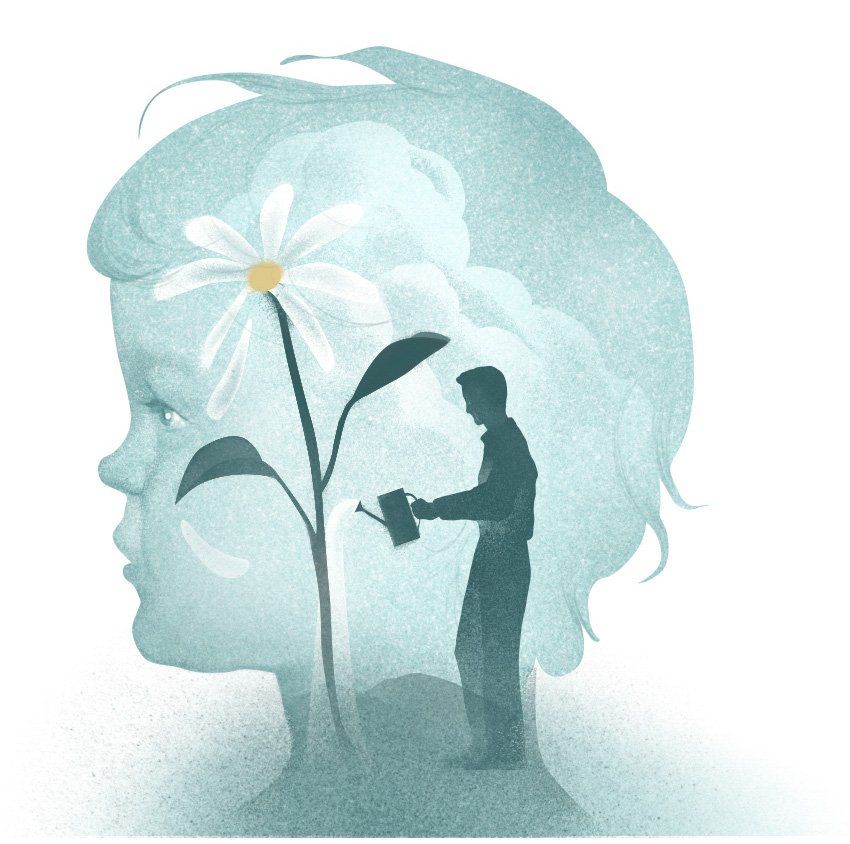
Science that’s focused on these windows takes its cue from a well-known biomedical hypothesis known as DOHaD, or the Developmental Origin of Health and Disease. It posits that our early life experiences — from the womb to our teenage years — lay the biological foundations for our lifelong health.
This framework echoes influential psychological approaches. Attachment theory, for example, holds that our long-term understanding of relationships is determined by our very earliest ones, while resilience frameworks aim to understand what allows people to thrive through adversity during these sensitive periods.
The focus on the importance of plasticity in early life also resonates with high-profile economic arguments. Nobel Laureate James Heckman, PhD, has powerfully demonstrated that small investments in early childhood well-being pay exponential dividends later in life — for individuals and for society at large.
“These developmental windows of opportunity mean we have the chance to create massive change with minimal investment,” Bush says. “Our science is producing objective measures, free of bias, that show that interventions during these windows aren’t just helping kids and families emotionally in the immediate term — they’re laying the foundations for much better health years after treatment.”
On the Clock
Trauma can make kids’ bodies extra sensitive to stress. This can result in a biological clock that starts “ticking” too fast, a form of accelerated aging that compromises the ability of cells to function well. DNA repair becomes unreliable. Molecular regulation loses efficiency. Inflammation disrupts signaling networks.
The results may or may not be immediately apparent. But because epigenetic changes are durable — with shifts in molecular coding that are copied into new cells as they reproduce — this fast-tracked cellular breakdown can follow kids throughout their lives and result in chronic illness.
“Life gives us these incredible windows of opportunity to influence significant change,” says Sarah Merrill, PhD, an epigeneticist at the University of Massachusetts Lowell who collaborated on the study. “Epigenetics illuminates this. We can measure the positive effects of rebuilding trust between kids and their parents on a molecular level. That’s amazing.”
Image
It’s newly possible to measure these early childhood epigenetic shifts, thanks to recent accomplishments at the University of British Columbia, where Merrill was completing a postdoctoral fellowship while working with the UCSF team on the study. There, her research group, the Kobor Lab, had just created the Pediatric-Buccal-Epigenetic (PedBE) clock, the first epigenetic clock designed for babies and children.
First introduced in 2012, aging clocks have become increasingly popular as longevity science has made waves across the research and wellness spheres. Given blood, organ-specific samples, or a swab from inside the cheek, epigenetic clocks purport to compare your chronological age to your biological age.
These readouts provide insight into how our bodies are standing up against the steady march of time. They can also discern whether lifestyle changes or medical interventions are improving or worsening our aging processes.
Still, not many people realize these measurements aren’t necessarily spot-on. Epigenetic clocks for adults are known to be blunt instruments, operating with an acknowledged margin of error of several years — at best.
“Obviously,” Merrill says, “that’s far too big of a margin when you want to understand what’s going on with the cells of a 3-year-old.”
Bush’s study was one of the very first to implement PedBE, a clock sensitively tuned not only for accuracy, but also to account for the dramatic pace and range of physical changes we undergo during childhood.
With the benefit of this clock, Bush’s team was able to prove that CPP reins in the harm that trauma inflicts on kids’ bodies. Its epigenetic measurements demonstrate that therapy curbs accelerated biological aging, improving children’s chances for good health throughout their lives.
Data suggests that without this therapy, the children’s aging not only would have stayed on an accelerated path, it would have continued to get faster and faster. Left unchecked, this kind of biological damage accumulates and worsens with time. But thanks to Lieberman’s clinic, these kids are back on track, growing up right on schedule.
A Revolutionary Turn Toward Prevention
Interventions like Child-Parent Psychotherapy are low-cost, of universal benefit, and appropriate for huge swaths of the population and also contribute to enormous financial savings down the line. It’s no wonder that Bush wants policymakers to take notice.
Bush and Lieberman’s voices are already playing a major role in the public conversation. The evidence for trauma exposure’s link to serious health problems is so strong that California has recently widened its criteria for early childhood coverage of trauma therapy — with the goal of reducing health care spending down the line. “Kids don’t need an official diagnosis to get trauma therapy in California. They don’t need to be visibly suffering or physically ill,” Bush says.
The science is clear: The physical damage prompted by these experiences may not be evident for years. But when that damage eventually shows up, it’s much more complicated and expensive to treat. “Prevention is both compassionate and cost-effective,” Bush says. “If kids have been through a traumatic situation, we want them to qualify for help right away.”
Prevention is both compassionate and cost-effective. If kids have been through a traumatic situation, we want them to qualify for help right away.
Nicki Bush, PhD
California is ahead of the curve in this revolutionary turn toward prevention, and Bush would like to see support grow for interventions that leverage our natural plasticity for enduring, long-term benefit. With studies like this one, Bush and her team are providing the hard evidence that mental and physical health advocates need to make the strongest possible case for interventions that will give us the greatest chance for well-being.
“There’s a big question that science and policy need to be bold enough to confront together,” Bush says. “Why are we waiting for kids — and the adults they become — to get sick before we treat them?”
For decades, Child-Parent Psychotherapy has been a standard-bearer for the needs of the most vulnerable, bringing attention and respect to the emotional lives of babies and children. Bush’s research has illuminated just how profound the impact of this approach can be.
Thanks to this work, we now know that when CPP helps families transform isolating fear into shared feelings of closeness and protection, intricate molecular processes leap into action. These processes give us internal environments of safety to match the external ones we create, laying the biological groundwork for years of healthier growth and regulation.
No one can control everything that happens to them in life. We’re all vulnerable to experiences that wound and change us. But we also all have extraordinary power to transform. The healing stories we create for ourselves don’t just shape our minds. They shape our bodies, too.