On March 24, 2022, I was diagnosed with terminal stage IV mediastinal paraganglioma — a rare cancer that affects the lungs and bones. I was just six months away from achieving my lifelong dream: competing in Kona, Hawaii, in the Ironman World Championship — the Super Bowl of ultra-endurance racing.
Earlier that year, when I began gasping for air on short runs despite being at peak fitness, my clinical intuition kicked in — shaped by years as a nurse practitioner at UCSF Health on the lung transplant team. Tests confirmed what my gut knew. In an ironic role reversal, I found myself on the patient side of a life-changing diagnosis.
This wasn’t my first health crisis. In 2007, I’d had surgery for a brain tumor, an experience that introduced me to the philosophy of Stoicism and the daily contemplation of mortality. It’s a way to live with gratitude, meaning, and acceptance. So when I was told I had cancer in 2022, I wasn’t shocked. Instead, I thought, “You’ve got this. You’ve trained for this.”
I relied heavily on Stoic practices, patience, and resilience as I underwent two years of treatment and slowly rebuilt my strength. I rode my stationary bike when I had the energy and hiked when I could. I grew stronger one mile at a time, and eventually I started competing in sprint triathlons, then a marathon, and eventually an ultramarathon.
Many believe that terminal cancer is a death sentence, but it’s not. It’s an invitation to live — to do whatever you want. I knew exactly what I wanted: to live fully with my disease. And that included getting to Kona.
Years in the Making
When I became an endurance athlete 20 years ago, the finish line at Kona was my holy grail, and it was finally within reach. The day before the race, the energy was electric. As I set up my bike, I thought, “My God, I can’t believe this is happening.”
I arrived at Kona grateful to be alongside 2,400 athletes on the biggest stage in our athletic careers. I would use the collective spirit of everyone who understood what it meant to triumph against adversity to power me through.
An Ironman demands absolutely everything from your body and mind: you must finish a 2.4-mile deep-water swim, a 112-mile bike ride, and a 26.2-mile run in 17 hours. Besides physical endurance and mental resilience, breathing mastery is essential. My condition makes breathing while horizontal nearly impossible, so I knew the swim would be my biggest hurdle. It almost took me out of the competition.
After 90 minutes, I’d covered only half the distance. I thought there was no way I could finish the swim. I was already tired, and I knew the longer I was prone, the harder it would be to breathe. I was gasping for air. I had to flip on my back repeatedly to catch my breath, ignoring the stings of jellyfish because breathing required all my focus. This was a make-or-break moment. I thought of the people I was carrying with me and the message of hope I was determined to deliver. I just kept fighting, telling myself to keep moving. I got to shore with two minutes to spare before the cutoff. My face was purple and swollen beyond recognition. I sobbed ugly tears. I had just done the unthinkable.
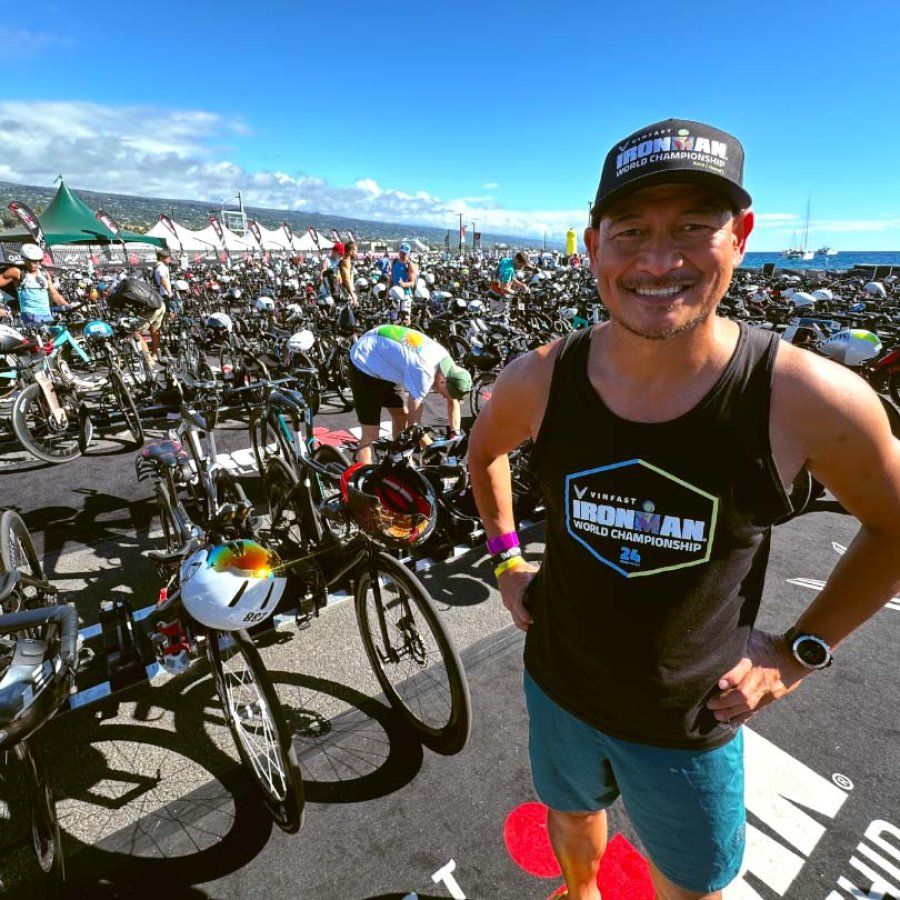
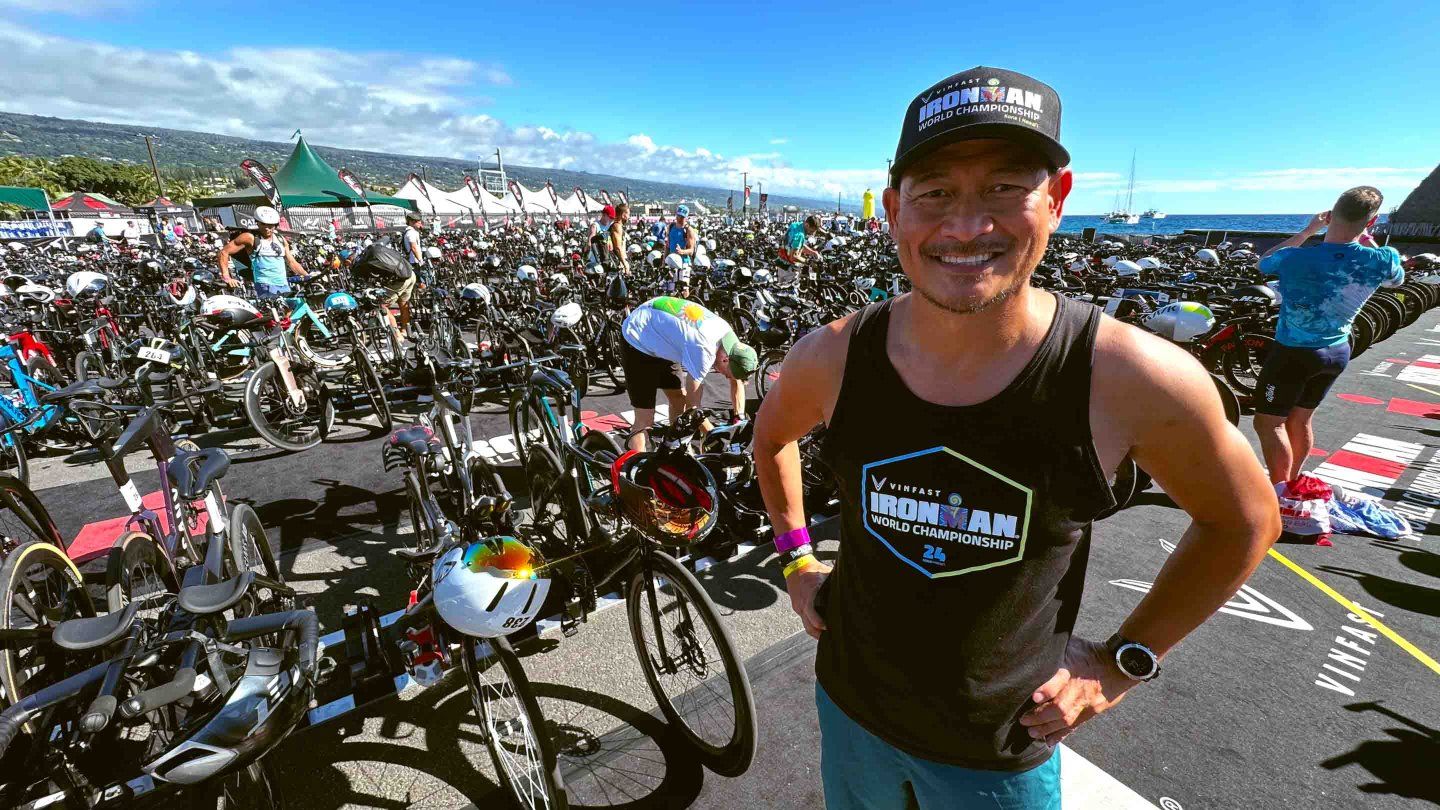
“The collective spirit of everyone who understood what it meant to triumph over adversity would power me through.”
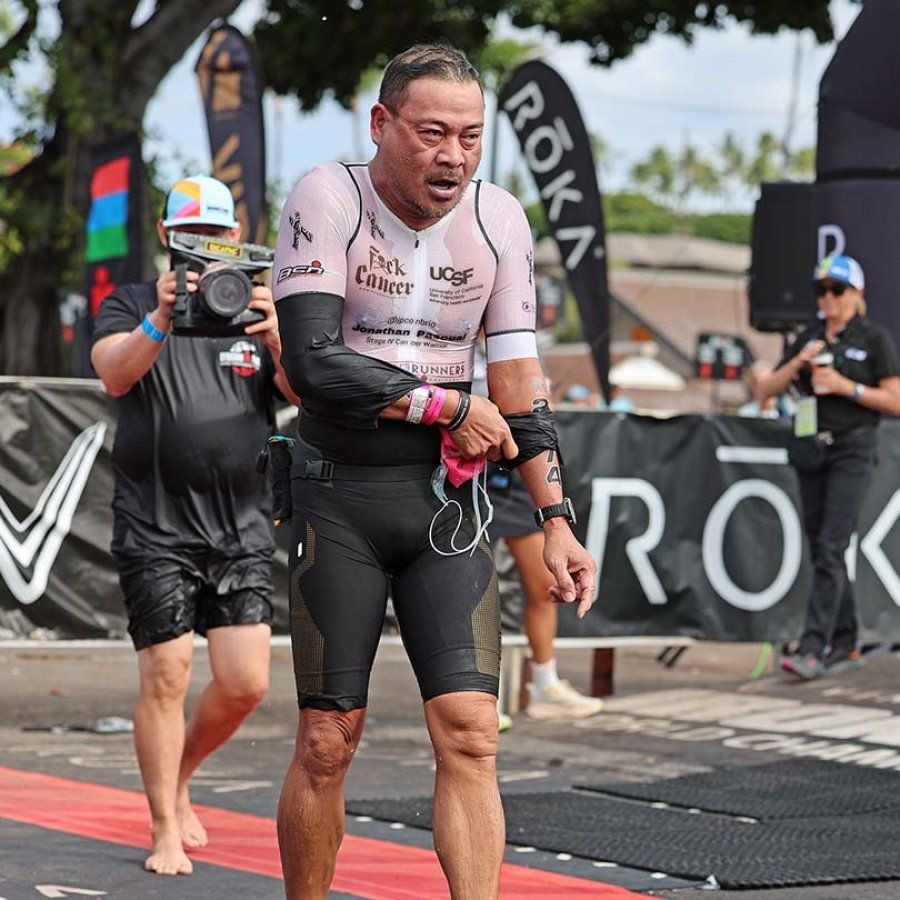
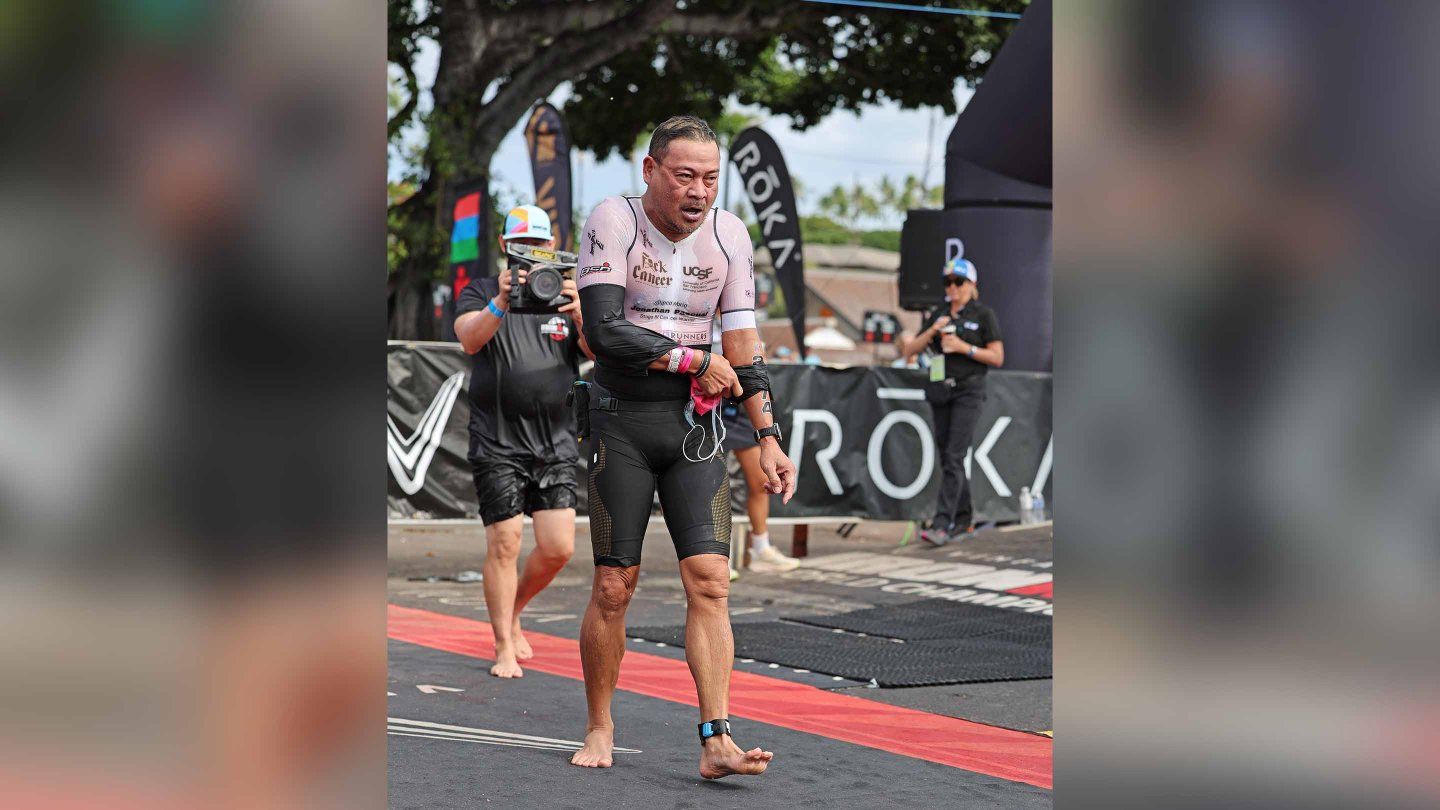
“I was gasping for air. This was a make-or-break moment.”
A Test of Survival, a Show of Humanity
The bike leg at Kona is notorious, with crosswinds so fierce you have to lean sideways to avoid getting blown away. By the halfway point of the 112-mile course, I desperately needed hydration and nutrition, but my bag with my food and high-calorie powders was nowhere in sight. The hunt for replacements cost me 20 minutes.
Racing downhill was terrifying. I was going super fast and thought there was a real possibility of a fatal crash. Then I came upon the stark reality of what that looked like: a fallen cyclist in the middle of the road, alone and badly injured. I couldn’t lift him to safety because my spine was already weak from a break a few months prior, but I wasn’t going to leave him alone in the road. I administered first aid and stayed until help arrived. When I got to the bottom of the hill, I realized I’d lost an hour, and the 17-hour cutoff was looming.
A full marathon still stood between me and the finish line — the ultimate test of whether or not my dream would be fulfilled.
I was exhausted, my body already pushed beyond its limits. How was I going to run a marathon? I kept telling myself, “You’re an ultramarathoner. You can run 100 miles. This is only 26.2. You can do this.” It took every ounce of my mental strength to keep moving forward.
I couldn’t breathe on the hills, so I walked them, which slowed me down. I had to finish by midnight. I told myself, “You’ll finish this thing.” About a mile out, I began to hear the crowds, and I just kept moving toward the finish line lights and my family and friends who were waiting for me.
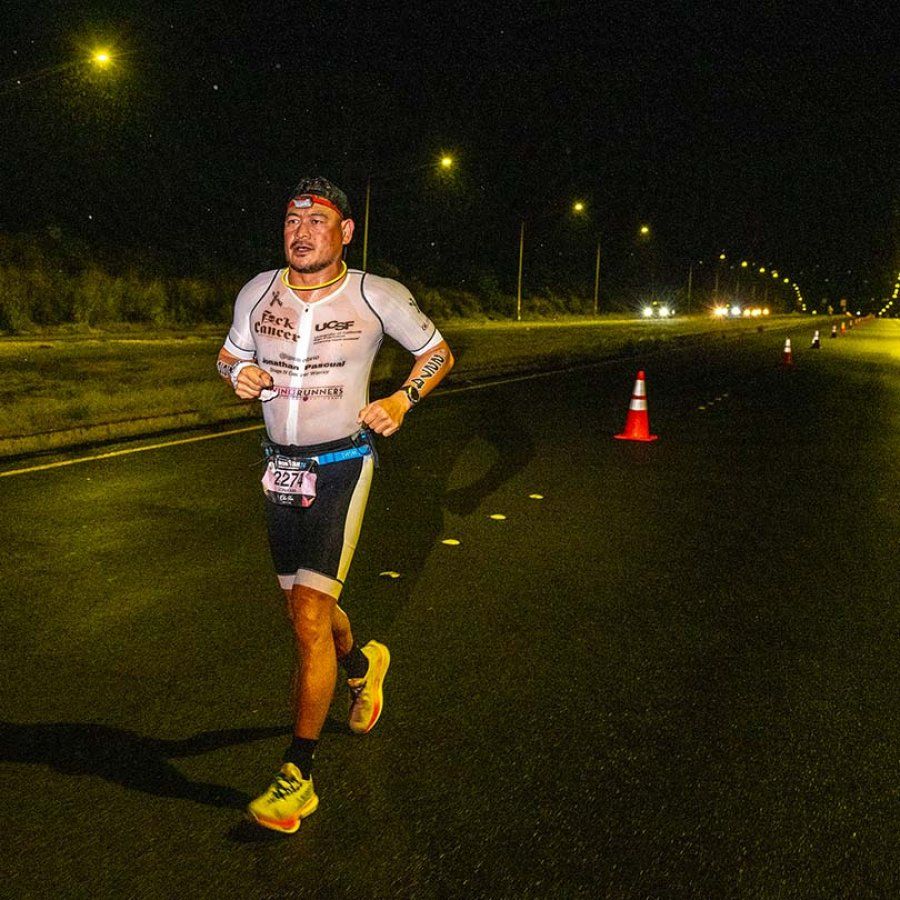
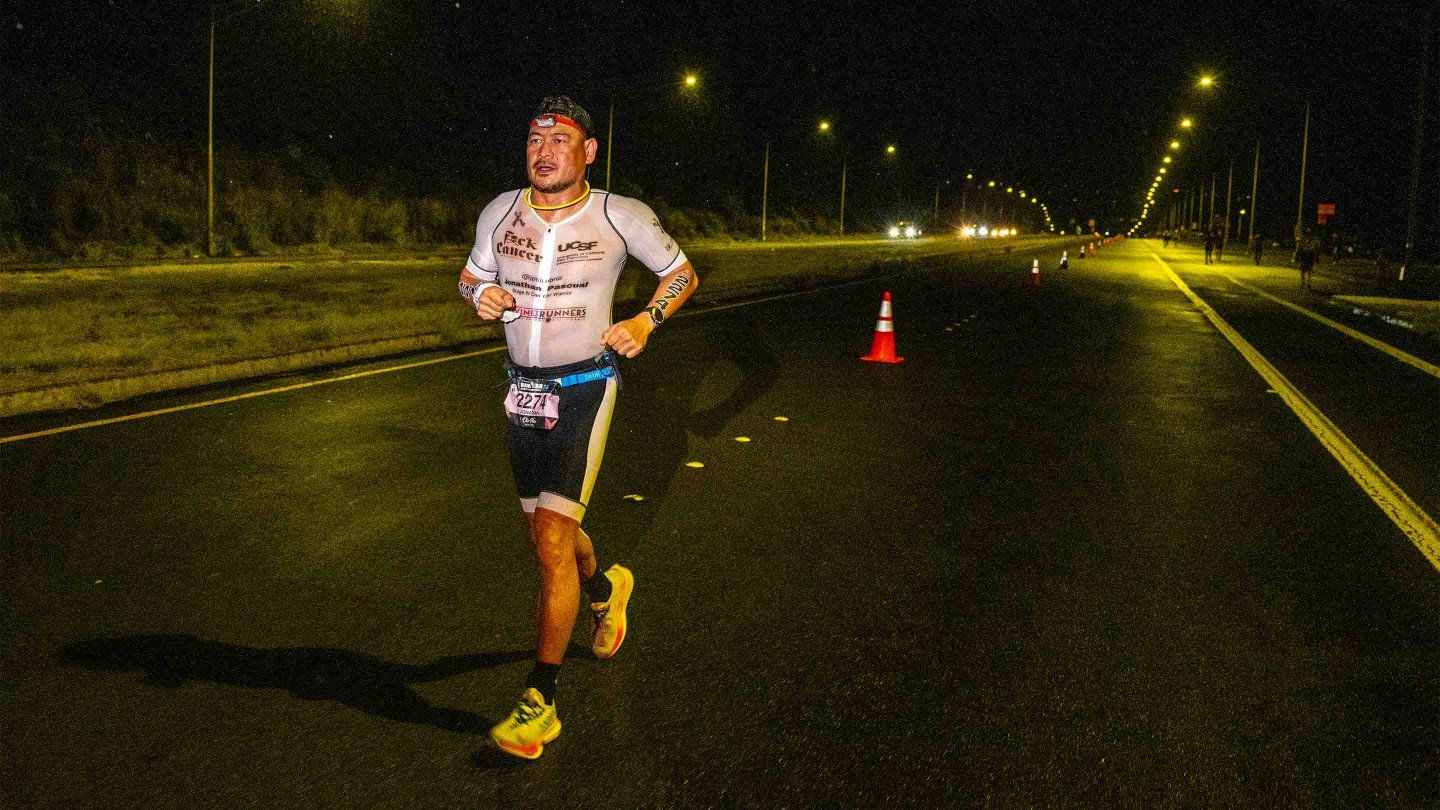
“You can run 100 miles. This is only 26.2.”
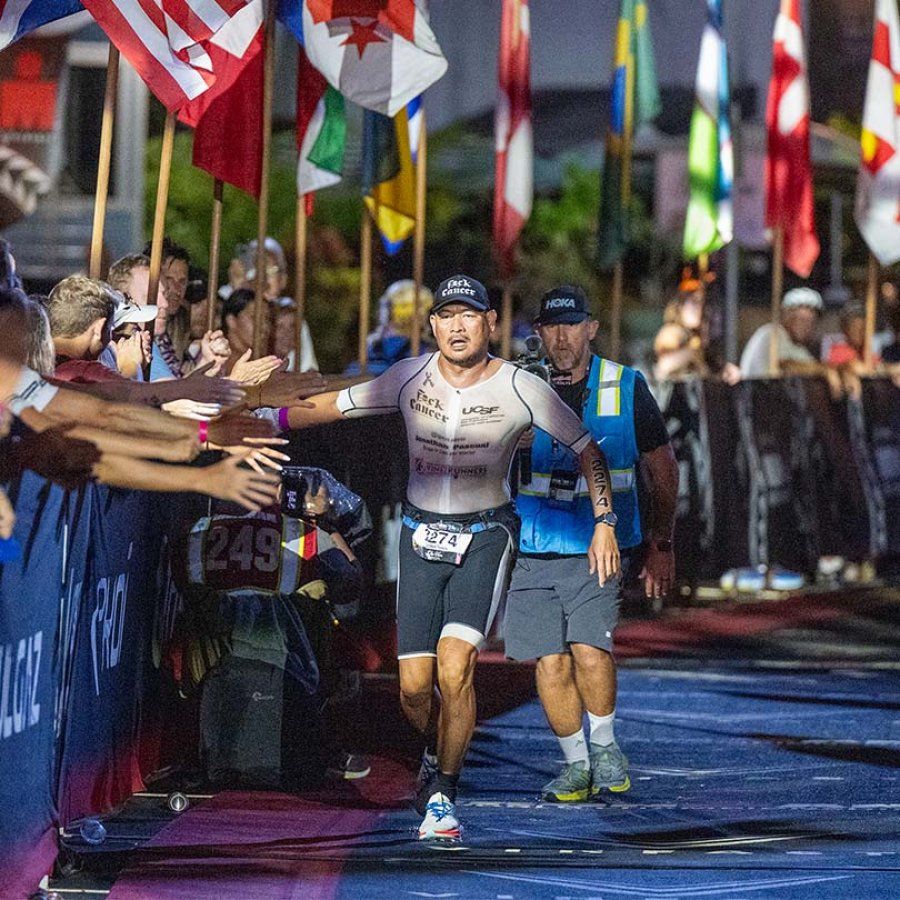
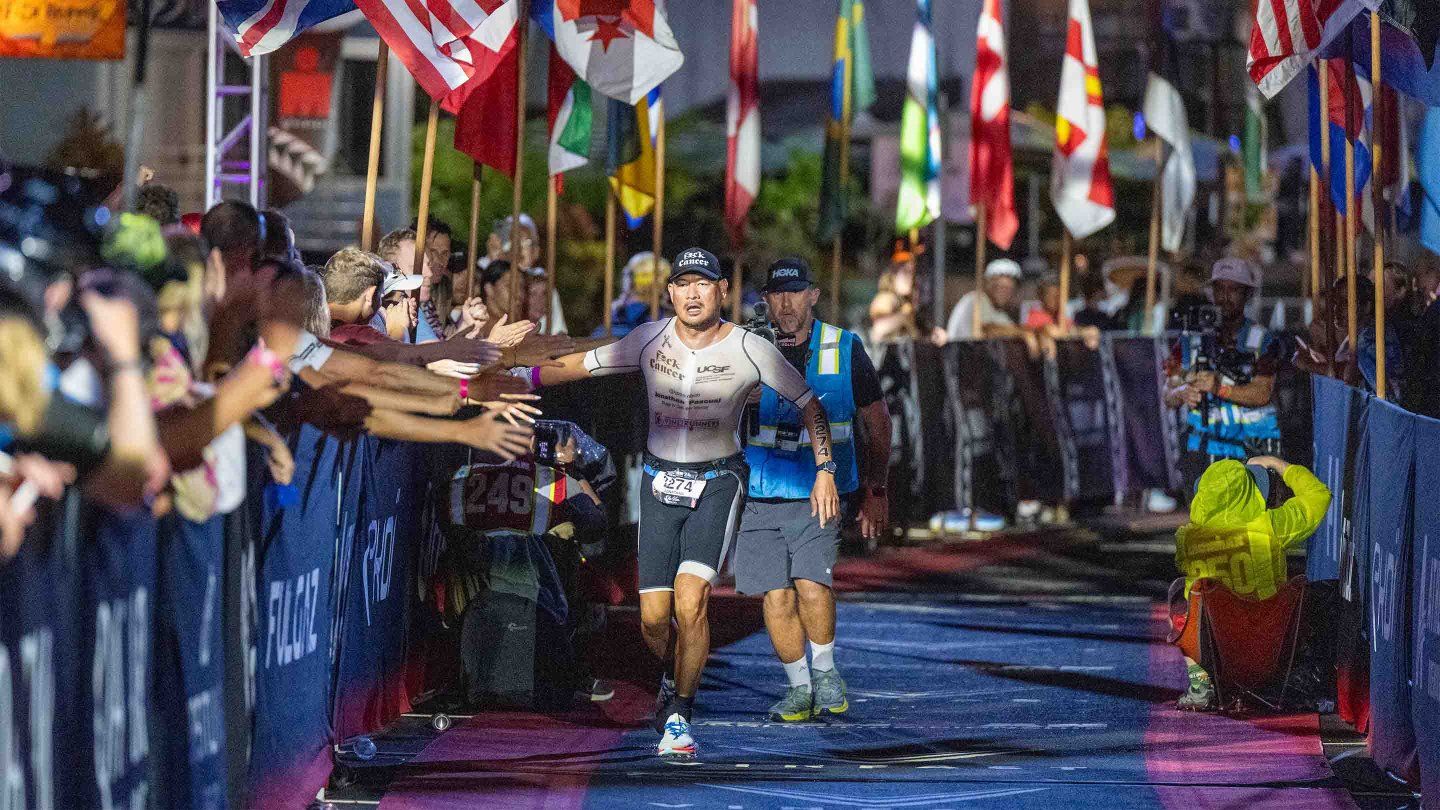
“This was the movie I had played countless times in my mind.”
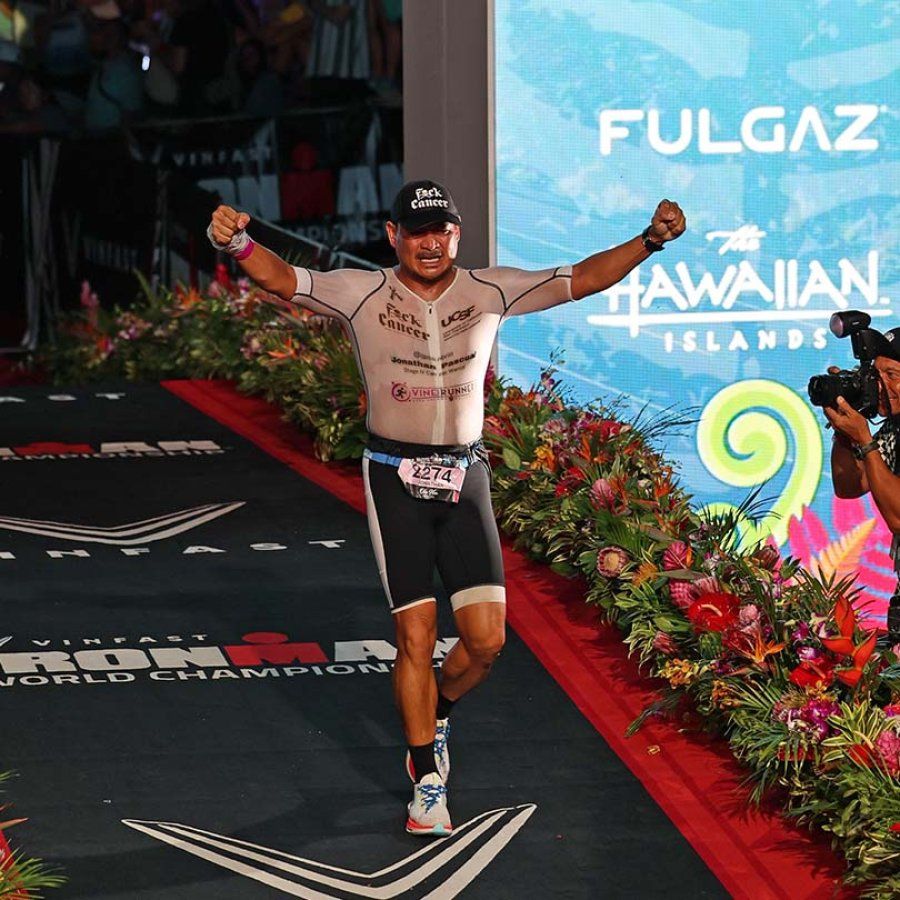
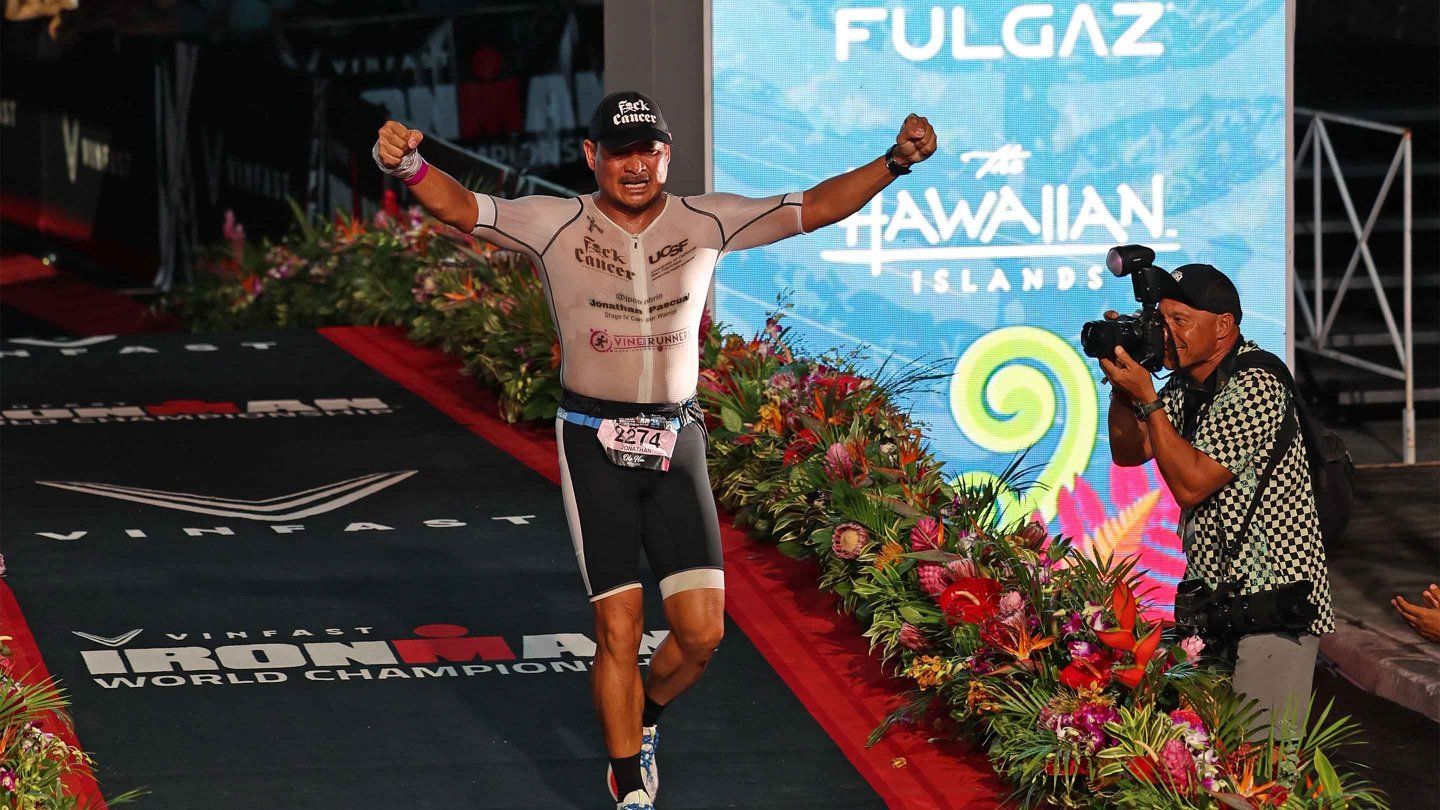
“It was a message of hope against all odds for others who were going through difficulties.”
Victory Shared — 16:12:46
It was almost midnight, and I was one of the last finishers. Thousands of people were lined up, cheering, clapping, and shouting my name. This was the movie I had played countless times in my mind.
When I crossed the finish line, I felt a triumphant release when I heard my name over the loudspeaker — a flood of joy and disbelief. I had achieved the impossible. I was overwhelmed with gratitude for everyone who was there supporting me.
I saw my wife, mom, and son and ran to them. This was pure happiness. I had just lived my dream because of the love and support of my family and my contingent from California and Hawaii. They were there for me throughout my life, during my treatments and training, and at the finish line. This triumph belonged to more than just me. My UCSF lung transplant colleagues, doctors and nurses, friends, and strangers who followed my journey online — they all gave me the strength to get here. I didn’t make it to Kona alone, and I didn’t cross the finish line alone.
The Race That Matters Most
Terminal cancer has taught me the art of dying, but, more importantly, the art of living. Life doesn’t stop with a diagnosis, and acceptance doesn’t mean giving up. It means embracing every moment with gratitude and purpose. My legacy isn’t about the medals or getting across the finish line at the world championship; it’s about how I made people think or feel. I don’t fear death. I fear not living fully. And in Kona, I lived.
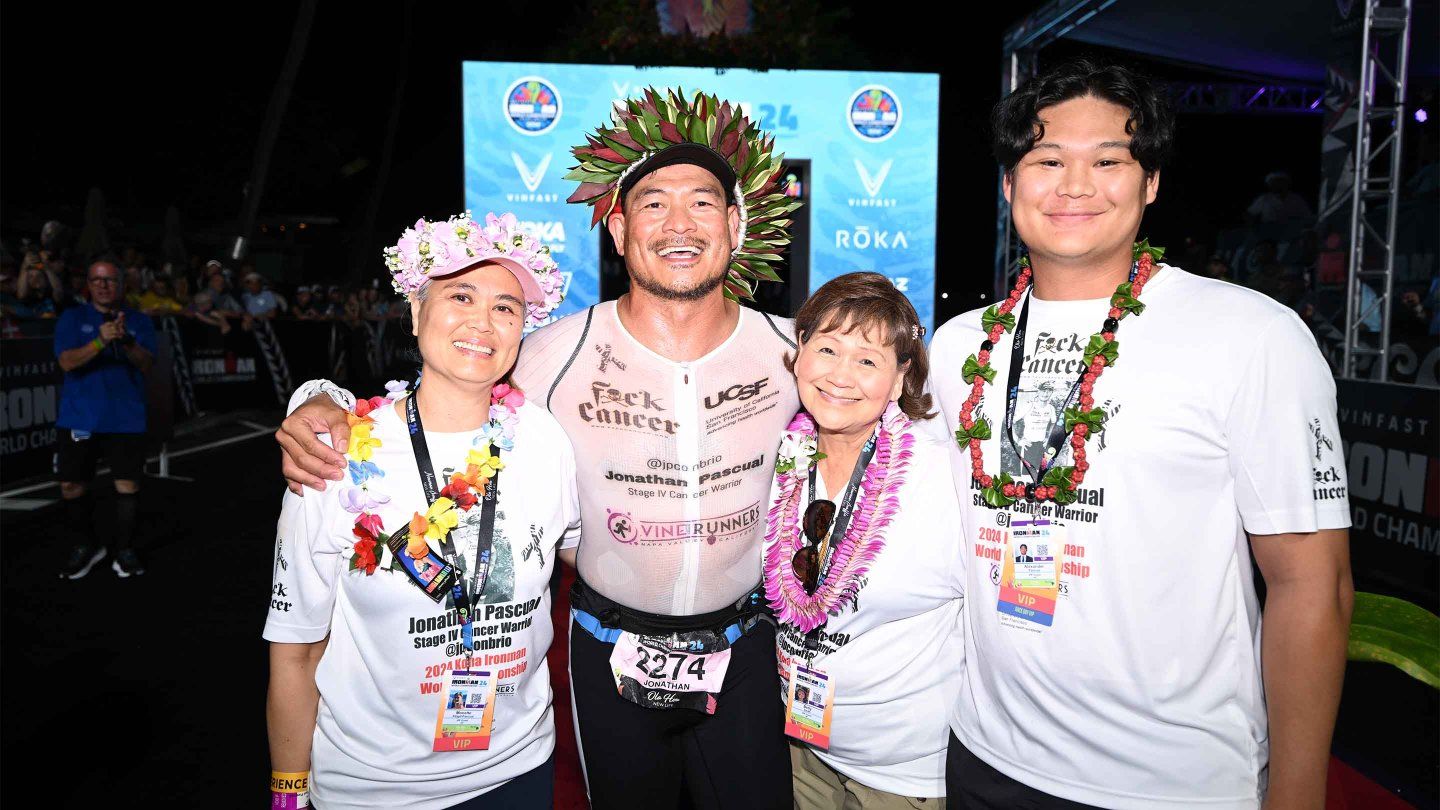
“I didn’t make it to Kona alone, and I didn’t cross the finish line alone.”
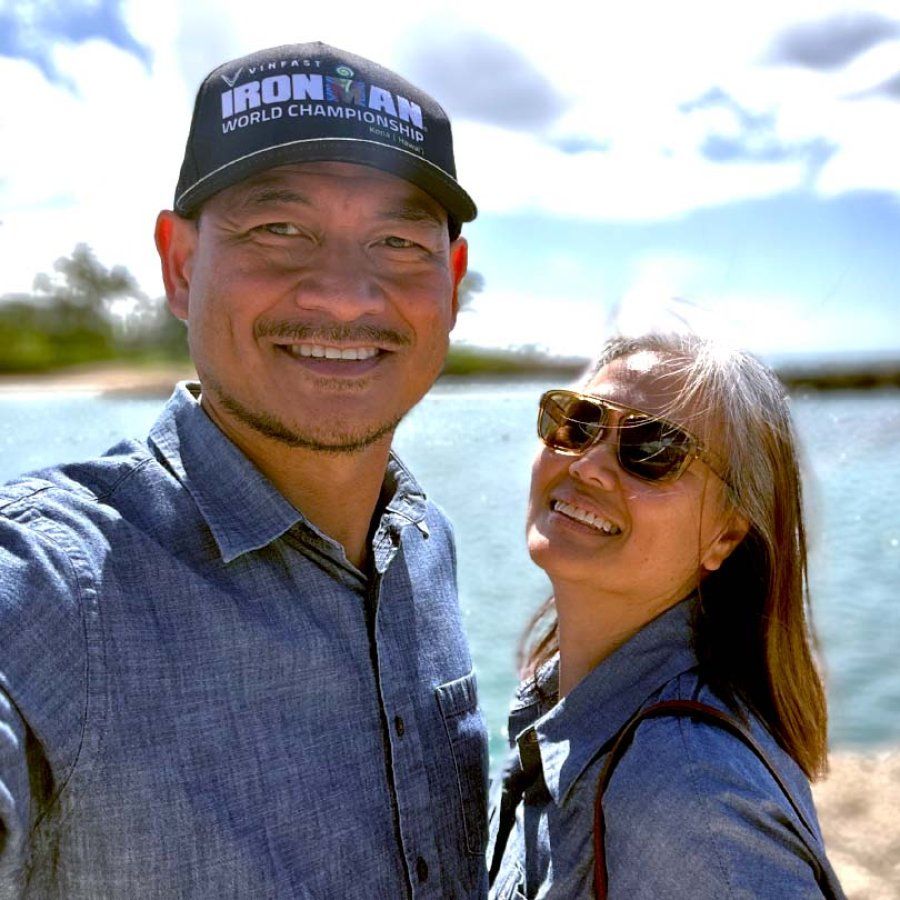
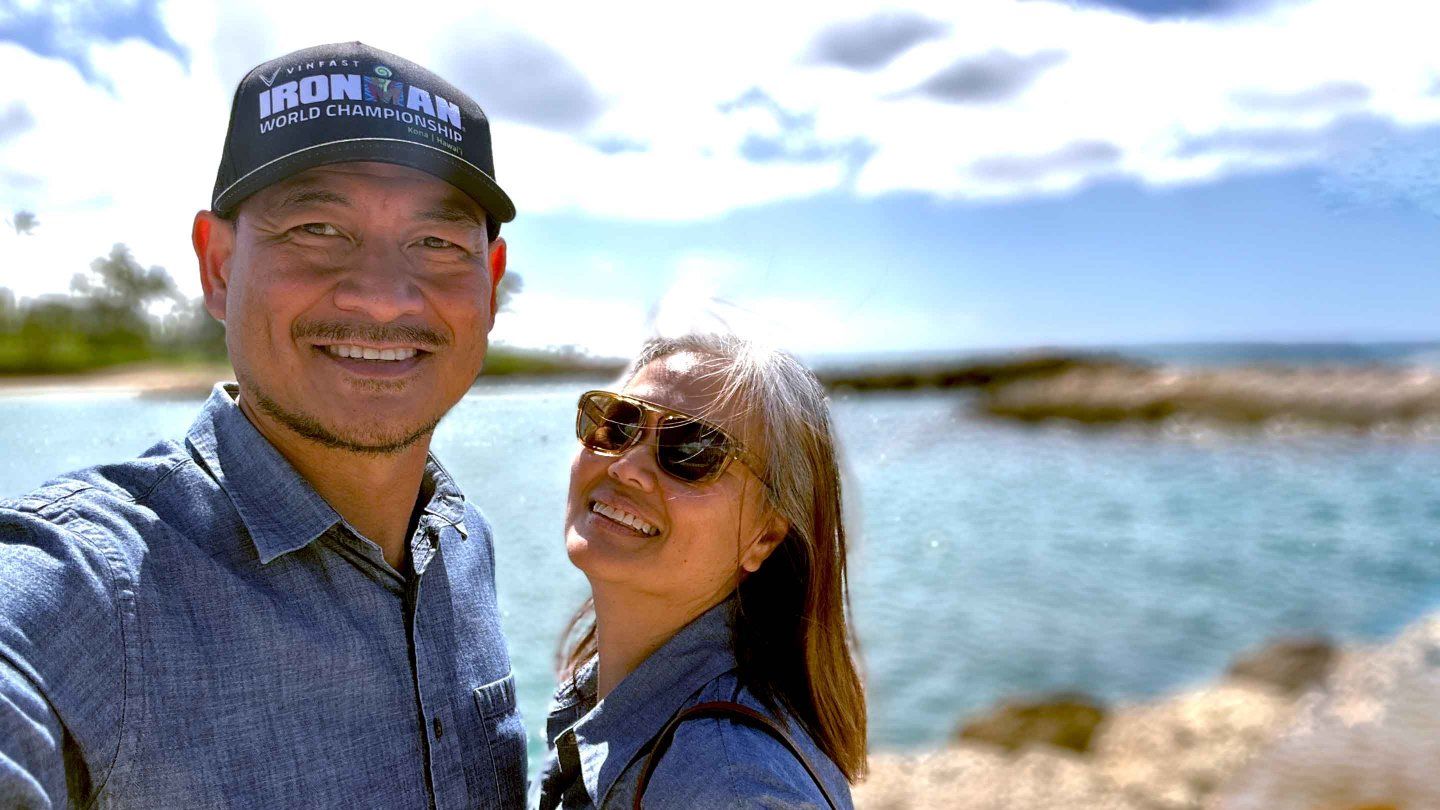
“Terminal cancer has taught me the art of dying, but, more importantly, the art of living.”
Photos: Bikes, Courtesy Jonathan Pascual; Coming out of swim, Tony Svensson / IRONMAN; Running at night, Donald Miralle / IRONMAN; Finish with flags, Donald Miralle / IRONMAN; Finish line, Tony Svensson / IRONMAN; With family, Donald Miralle / IRONMAN; With wife, Courtesy Jonathan Pascual.