
Displaying 6541 - 6570 of 17005
-
-
Archive: New Studies Show That Young Blood Reverses Effects of Aging When Put Into Older Mice
-
Archive: Young Blood Reverses Signs of Brain Aging in Mice
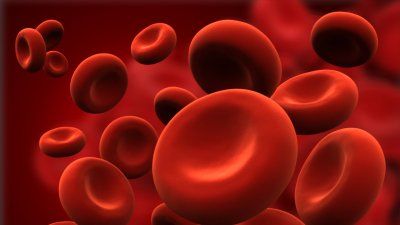
Young blood really does rejuvenate the brain, at least in mice, raising hopes that molecules in the blood may be identified that can do the same for humans, according to a new UCSF study.
-
Archive: Young Blood Restores Old Mice
-
Archive: Doctors Make Boy Radioactive to Treat Rare Cancer
-
Archive: UCSF TO PROVIDE FREE DENTAL SCREENINGS IN SF'S BAYVIEW DISTRICT
-
Archive: 2014 Alumni Weekend to Celebrate UCSF 150th Anniversary
As UCSF embarks on a yearlong sesquicentennial celebration, it is calling together alumni and supporters for mixers, continuing education, talks, tours and performances at the 2014 Alumni Weekend.

-
Archive: CHILDREN'S ADVOCACY CENTER HELPS CHILDREN EXPOSED TO VIOLENCE
-
Archive: ADHD medicine’s long-term safety still a question
-
Archive: ADHD Medicine’s Long-Term Safety still a Question
-
Archive: Annual Penny Pitching Contest — Fun, Charity and Cheating
-
Archive: UCSF Hosts Capitol Hill Briefing on Kidney Research Innovations
UCSF bioengineer Shuvo Roy, PhD, traveled to Capitol Hill on Thursday, May 1, to present at a briefing called “Innovations in Kidney Research: New Hope for Patients.”

-
Archive: STANFORD HOSPITAL INTRODUCES 3D BREAST SCREENING
-
Archive: IRhythm's Monitor Wins Patients' Hearts
-
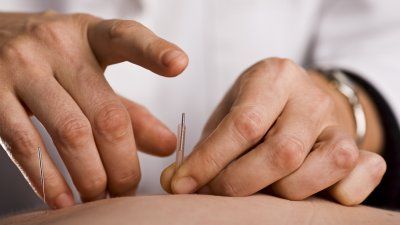
Archive: Acupuncture Helps Pediatric Patients Manage Pain and Nausea
UCSF Benioff Children's Hospital San Francisco one of a very few academic medical centers to offer acupuncture to both inpatients and outpatients to manage pain.
-
Archive: CMS should not pay for regular CT Screenings for Heavy Smokers, Panel says
-
Archive: CIRM Vets Candidates to Head Stem Cell Agency
-
Archive: Autoimmune Diseases May Succumb to New Drug Strategy
New pharmaceuticals to fight autoimmune diseases, such as multiple sclerosis, rheumatoid arthritis and psoriasis, may be identified more effectively by adding genome analysis to standard drug screening, according to a new study by a research team led by UC San Francisco and Harvard researchers.
-
Archive: How to Diversify a Campus, in Spite of the Supreme Court
What if the Supreme Court had ruled this past week that states have the constitutional right to require that their public universities consider only SAT scores when making admissions decisions?
-
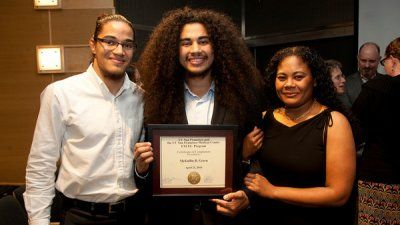
Archive: EXCEL Graduates Take the Road Less Traveled
Nine interns graduated this month from the sixth cycle of the EXCEL program, UCSF’s flagship workforce development program.
-
Archive: Women: Depressed, agitated, can't sleep? It Could be Hormones
-
Archive: Neurobiologist Shares Personal Journey, Life Lessons in 'Last Lecture'
Medical students chose the neurobiologist Igor Mitrovic to give the 2014 “Last Lecture,” the annual campus rite in which a faculty member is asked to deliver the lecture he’d give if it were his last.

-
Archive: Rare Polio-Like Disease in California
Over the past 18 months, physicians in California have observed on rare occasions what may be a new disease, one in which patients, usually children, quickly and permanently lose muscle function in an arm or leg.
-
Archive: Knitting has Proven Therapeutic Value
-
Archive: Learning More about Pediatric Pulmonary Hypertension
-
Archive: Chronic Stress Heightens Vulnerability to Diet-Related Metabolic Risk
New research out of UCSF is the first to demonstrate that highly stressed people who eat a lot of high-fat, high-sugar food are more prone to health risks than low-stress people who eat the same amount.

-
Archive: Stanford has Identified the Cause of most Bladder Cancer
-
Archive: Ban Sought on Animal Antibiotics as Human Resistance Grows
-
Archive: Overlooked Cells Hold Keys to Brain Organization and Disease, UCSF Study Shows
Scientists studying brain diseases may need to look beyond nerve cells and start paying attention to the star-shaped cells known as “astrocytes,” because they play specialized roles in the development and maintenance of nerve circuits and may contribute to a wide range of disorders, according to a new study by UCSF researchers.
-
Archive: Rebuilding Limbs with Ingenuity and a 3-D Printer